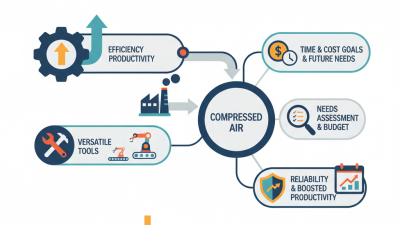
How to Choose the Right Compressed Air Supply in 2026
Choosing the right Compressed Air Supply in 2026 starts with understanding the work it must support. A production line running air tools has different needs from a packaging cell or a small workshop. The correct setup depends on required pressure, actual airflow, operating hours, air quality, and future demand. A compressor’s advertised capacity alone is not enough to make a sound decision.
Start with measured demand. Record peak use, normal operating load, and periods when equipment runs together. Peak use matters. Then check the pressure required at the point of use, allowing for losses through filters, dryers, hoses, and piping. Air quality deserves equal attention: moisture, oil, or particles can damage equipment and affect product quality. A dryer or filter should match the application, not simply the biggest option in a catalog.
Energy use, maintenance access, available floor space, and noise also shape the choice. A variable-speed compressor may suit changing demand, while a fixed-speed model can work well under a steady load. These are starting points, not universal rules. A neat spreadsheet can still miss a brief demand spike or a leak that distorts the baseline. Verify calculations with operating data and confirm equipment specifications with qualified suppliers. In this guide, we’ll compare the key system choices and show how to evaluate them for your site. The aim is practical: reliable air, appropriate quality, and no avoidable capacity or energy expense.
Define the Application and Compressed Air Requirements
Before selecting a compressed air supply, define what the equipment actually does. List each tool, machine, and process that uses air. Note its required pressure, airflow, and air quality at the point of use. Check the equipment documentation, then verify critical values during real operating conditions. A nameplate rating alone can mislead.
Map when demand occurs. A short burst from a blow-off nozzle differs from a tool running continuously. Record peak and typical flow, operating hours, and which machines run together. Small details matter. A pressure gauge near the compressor may show adequate pressure while a distant workstation loses pressure through long, narrow piping or clogged filters. Measure near the user, if possible.
Also consider moisture, oil, and particles. Some processes need dry, clean air; others may tolerate less treatment. Specify the required quality before sizing dryers and filters, since extra treatment can reduce pressure and increase maintenance. It is easy to overlook leaks or future shifts, too. Leave sensible capacity for known changes, but avoid sizing from vague growth estimates. A simple demand log over several shifts can reveal patterns that a quick walkthrough misses. The numbers may still be imperfect, so document assumptions and revisit them after installation.
How to Choose the Right Compressed Air Supply in 2026 - Define the Application and Compressed Air Requirements
Use these typical ranges as planning references, not universal specifications. Confirm pressure, air quality, and demand against equipment documentation, process requirements, and applicable regulations.
| Application |
Typical Point-of-Use Pressure |
Air Quality Starting Point |
Demand and System Checks |
| General-purpose pneumatic tools |
Commonly 6–7 bar(g) (87–102 psi); check the tool specification. |
A practical starting target may be ISO 8573-1 Class 4:4:3 (particles:water:oil), subject to tool requirements. |
Record each tool’s consumption and duty cycle. Check pressure at the tool while operating, including hose and filter pressure drop. |
| Instrument and control air |
Often around 5–7 bar(g); verify the minimum pressure required by the instruments and actuators. |
A common starting point is ISO 8573-1 Class 2:3:2. Select a lower pressure dew point if the distribution system may become colder than the air’s dew point. |
Include simultaneous actuator demand, leakage, and any specified response-time requirements. Confirm the required quality with the instrument supplier. |
| Spray finishing |
Frequently 2–6 bar(g), depending on the spray equipment and process. |
Set particle, water, and oil limits with the coating and equipment suppliers; contamination can affect finish quality. A pressure dew point below the lowest expected pipe temperature helps limit condensation. |
Measure consumption at the specified operating pressure. Check point-of-use filtration, drain performance, and the risk of oil or water carryover. |
| Packaging and general production equipment |
Commonly 5–7 bar(g); use the equipment manufacturer’s operating range. |
Choose the ISO 8573-1 classes according to whether air contacts the product, packaging, or only machine components. Requirements can differ by process and jurisdiction. |
Identify peak and average demand separately. Account for simultaneous operation, intermittent blow-off, leakage, and planned production growth. |
| Dry-air systems exposed to freezing conditions |
Determine pressure from the connected equipment; drying requirements do not set operating pressure. |
A pressure dew point of −20°C corresponds to water Class 3; −40°C corresponds to water Class 2 under ISO 8573-1. Select based on the coldest expected system temperature and required safety margin. |
Check the dryer’s rated inlet conditions, flow capacity, and pressure dew point. Verify performance at peak demand and during seasonal temperature changes. |
Planning notes: Pressure values are gauge pressure. ISO 8573-1 class notation is particles:water:total oil; a lower class number indicates a more stringent quality class. Size supply using measured or documented flow at the required pressure, considering simultaneous demand, pressure losses, leakage, and future capacity. For breathing air, food or pharmaceutical processes, and other regulated uses, follow the applicable standards and process-specific limits.
Calculate Airflow Demand and Operating Pressure
Choose the supply from measured demand, not the compressor’s advertised maximum. List each air-powered tool and its airflow requirement at the stated operating pressure. Check the equipment manual or data plate; values can differ between tools that look similar. Then identify which tools run at the same time. Add their demand, allowing for realistic overlap rather than assuming every tool operates continuously. Measure during real work. Note bursts from blow-off nozzles or rapid cycling, too; they can create brief peaks that a daily average hides. Small leaks add up.
Check pressure where the air enters the equipment while the busiest combination is running. A gauge beside the compressor may show a comfortable reading while a distant machine struggles. Long or narrow pipe, clogged filters, dryers, and fittings can all contribute to pressure drop. Set the supply to meet the tool’s required inlet pressure under load, not just at idle. Avoid compensating blindly by increasing compressor pressure: that can waste energy and may not fix a restricted line. Compare measured airflow and pressure with the system’s delivered capacity, and leave a practical margin for demand variation. A spreadsheet helps, but it can still miss a short, noisy peak; repeat the check during a representative production cycle.
Compare Compressor Types and Energy Efficiency
Choosing compressed air in 2026 starts with understanding when and how much air your equipment uses. A reciprocating compressor can suit intermittent, lower-volume work, such as a repair bay running a few pneumatic tools. Rotary screw compressors are often better for longer operating hours and steadier demand. For very large, consistent flows, centrifugal models may be worth evaluating, though they need suitable operating conditions. The fit matters.
Energy efficiency depends on more than the compressor type. Compare specific power—the electricity required for a stated airflow—at the pressure your tools actually need. A variable-speed drive can reduce energy use when demand changes frequently, but it may offer little benefit under a constant, well-matched load. Check the whole system, too: clogged filters, pressure drops, and leaks can make an efficient compressor work harder. Small leaks add up.
Use meter readings from a representative production week, not a quiet shift. Note that demand can be uneven, and one week may not tell the whole story. Ask for performance data at your required pressure, then compare it with measured site conditions. A practical choice balances airflow, duty cycle, maintenance access, and energy use—not just the lowest quoted price.
Assess Air Quality, Treatment, and Storage Needs
How to Choose the Right Compressed Air Supply in 2026
Air quality should match the process, not a generic “clean air” target. Check the required particle, water, and oil limits at the point of use. ISO 8573-1 provides a classification system for these contaminants. Measure conditions during peak demand, too; a quiet shift can hide moisture problems that appear when tools run continuously.
Small details matter.
Treatment choices affect both reliability and energy use. A refrigerated or desiccant dryer may suit different dew-point requirements, while filters need correct sizing and regular maintenance. Too much treatment can add pressure drop, forcing the compressor to work harder. The U.S. Department of Energy’s Improving Compressed Air System Performance: A Sourcebook for Industry reports that compressed air can account for about 10% of manufacturing electricity use, and up to 30% in some facilities. That makes unnecessary pressure loss worth investigating.
Yet a spreadsheet alone can miss the wet pipe, clogged filter, or distant machine.
Storage should reflect demand patterns. A receiver near an intermittent, high-flow tool can help manage short surges and reduce pressure swings. It cannot fix an undersized compressor or poorly designed piping. Check receiver volume against the load cycle, and verify that condensate drains work.
Not always obvious.
Record pressure at the compressor and farthest outlet during real production; the difference may change your treatment and storage plan.
Evaluate Lifecycle Costs, Reliability, and 2026 Standards
How to Choose the Right Compressed Air Supply in 2026
Compare the full operating cost, not just the purchase price. Electricity often dominates over years of use, especially when compressors run at partial load or maintain pressure above actual needs. Measure demand during busy shifts and quiet periods. A pressure logger can reveal avoidable peaks.
Check the cost of dryers, filters, drains, maintenance, and planned downtime. Small leaks matter. A hiss near a fitting may seem minor, yet multiple leaks can waste substantial air. Reliability depends on matching capacity to real demand, allowing for peak use, and checking whether critical processes need backup supply. An oversized unit can cycle inefficiently; an undersized one may struggle during simultaneous tool use. Neither is ideal.
For 2026, confirm applicable standards and site requirements with a qualified compressed-air professional. ISO 8573-1 classifies air purity by particles, water, and oil, but the required class depends on the application. Review dew point, filtration, and condensate handling against actual process needs. Keep service records and retest air quality after system changes. Cost estimates are imperfect; actual energy use can differ from projections, so build in regular measurement.