China’s Angle Grinder Head manufacturers and suppliers serve workshops, construction teams, and industrial buyers seeking dependable cutting and grinding components. Product selection involves more than price. Buyers compare material quality, spindle compatibility, balance, heat resistance, and consistency between production batches. A head that vibrates on a test bench can signal poor balance; a rough finish may point to machining issues. Small details matter.
Market context helps, but it must be read carefully. Grand View Research estimated the global power tools market at USD 36.4 billion in 2023 and forecast a 5.2% compound annual growth rate from 2024 to 2030. This figure covers power tools broadly, not Angle Grinder Head products alone. It indicates wider demand, not a verified market size for this component category. That distinction matters.
This guide examines Chinese suppliers through product specifications, manufacturing capabilities, quality documentation, customization, and export experience. It also encourages buyers to request samples, drawings, and test records before placing substantial orders. Ask direct questions. Confirm the details.
For accuracy, no independently verifiable quotation from a named Angle Grinder Head industry specialist was available for this introduction. Rather than invent an expert or quotation, the article focuses on checkable supplier evidence and published market context. That leaves one limitation: supplier claims still require independent verification. A polished catalogue is not proof of performance.
An angle grinder head redirects motor power to the spindle, usually through a compact right-angle bevel-gear set. The pinion transfers motion to a larger gear, which turns the cutting or grinding disc. Gear contact, shaft alignment, and lubrication all affect heat, noise, and wear. A rough whine after use may signal poor engagement, though noise alone cannot confirm a fault.
Drive types vary by tool design. Corded motors draw power from an electrical supply, while battery models use a DC motor and electronic controls. These differences affect available speed and torque, but the head still needs a compatible gear set and spindle interface.
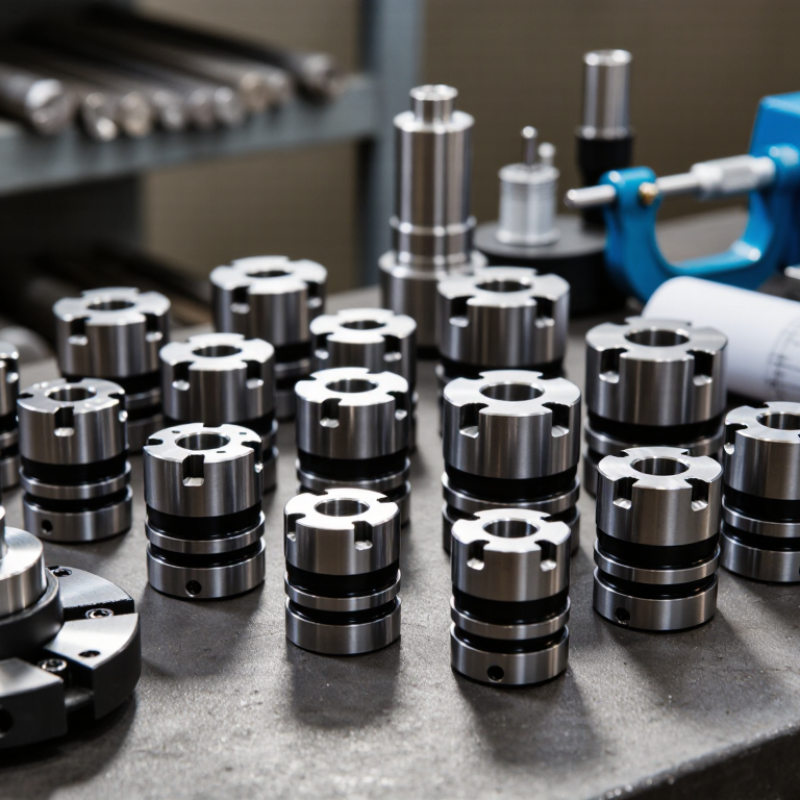
Core components commonly include the gear housing, pinion, bevel gear, bearings, spindle, and seals. Small details matter. Buyers comparing angle grinder head manufacturers and suppliers can ask for material specifications, gear tolerance data, and compatible spindle dimensions. A clean exterior proves little; internal finish and lubrication are harder to assess without inspection.
Even a well-made head may run hot if overloaded or poorly matched to the tool. That caveat is easy to overlook.
Common angle grinder discs range from 100 mm to 230 mm, but size alone does not determine whether a wheel suits a grinder head. The wheel’s permitted speed must also match the tool’s rated no-load speed. For example, a 230 mm wheel running near 6,650 rpm reaches roughly 80 m/s at its edge. A 100 mm wheel needs about 15,300 rpm to approach the same speed. Small numbers, big difference.
When comparing manufacturers and suppliers, ask for clear specifications: compatible disc diameters, spindle dimensions, rated speed, and guard requirements. A speed label alone is not enough. Check that the wheel’s marked maximum speed meets or exceeds the grinder’s rating, and never assume a larger disc can fit safely just because the spindle matches. In practical inspections, vibration, a loose fit, or a damaged guard deserves attention before work begins. The figures can look tidy on paper; real wear and handling are less tidy. Verify the exact model data, especially when replacing a head or changing disc size.
| Common Disc Diameter | Theoretical Maximum RPM at 80 m/s | Typical Grinder Class | Common Applications | Angle Grinder Head Sourcing Checks |
|---|---|---|---|---|
| 100 mm (4 in) | 15,280 rpm | Compact, light-duty grinder | Light cutting, deburring and work in confined areas | Confirm spindle thread, gear fit and guard clearance for the intended disc. |
| 115 mm (4.5 in) | 13,300 rpm | Compact general-purpose grinder | Metal cutting, weld cleanup and surface preparation | Check mounting dimensions and ensure the assembly is rated for the tool’s operating speed. |
| 125 mm (5 in) | 12,220 rpm | Common general-purpose grinder | Cutting and grinding metal, masonry or other suitable materials | Verify gear ratio, spindle arrangement, bearing seats and compatibility with the specified guard. |
| 150 mm (6 in) | 10,190 rpm | Mid-size grinder | Heavier grinding and cutting where a larger disc is required | Request dimensional drawings and confirm the head’s rated load and speed for the motor platform. |
| 180 mm (7 in) | 8,490 rpm | Large, heavy-duty grinder | Heavy material removal and large-area surface work | Check housing strength, gear engagement, bearing specifications and guard fitment. |
| 230 mm (9 in) | 6,640 rpm | Large, heavy-duty grinder | Heavy-duty cutting and grinding on large workpieces | Confirm disc capacity, guarding, spindle fit and the complete head’s suitability for the intended duty. |
RPM figures are theoretical calculations for a wheel peripheral speed of 80 m/s using the listed nominal disc diameters; they are not universal grinder operating speeds. Always follow the lower applicable limit shown on the wheel and tool, and never fit a wheel whose maximum rated speed is below the grinder’s no-load speed.
IEC 62841-2-3 sets particular safety requirements for hand-held grinders, with testing focused on the complete tool. An angle grinder head alone cannot demonstrate compliance. It must work safely with the motor, switch, guard, spindle, and selected accessories. This distinction matters when comparing manufacturers and suppliers. A well-machined housing is useful, but it does not prove safe operation. Small details matter. Depending on the tool and applicable edition, evaluation may cover mechanical strength, temperature rise, abnormal operation, and access to moving parts.
When sourcing a grinder head, request traceable drawings, material specifications, inspection records, and precise interface dimensions. Check that spindle threads, bearing seats, gear engagement, and guard attachments remain consistent across batches. These details are easy to overlook. A sample may fit once yet develop excess vibration under repeated loading.
Suppliers should support evaluation of the assembled grinder, not rely only on component claims. Keep test reports linked to the specific model, accessories, and standard edition. Requirements can change between editions. A certificate or factory checklist is not a substitute for appropriate testing.
It is not always tidy. Assembly, maintenance, dust, wear, and loose fasteners can all affect real-world performance.
China Best Angle Grinder Head Manufacturers and Suppliers
The quality of an angle grinder head starts with its gears. Durable alloy steel can handle repeated torque, but material choice alone is not enough. Controlled heat treatment helps the teeth resist wear without becoming too brittle. Small errors matter.
Machining tolerances affect how gears meet and how smoothly the head runs. Ask suppliers how they check tooth profiles, bearing seats, and backlash. A meaningful load test should run the assembled head under defined speed and torque conditions. Inspectors can monitor temperature, vibration, noise, and visible wear. Testing should be recorded by production batch, not just demonstrated on a sample. One limitation: a short test cannot predict every condition in daily use. A polished report is useful, but it cannot replace consistent batch records.
Tips: Request material and heat-treatment records. Check measurement methods, not only stated tolerances. If possible, compare a tested sample with production units. Listen for unusual noise during a controlled trial.
Representative hardness ranges for common steel gear heat treatments. Bars show the midpoint of each range; actual specifications depend on gear design, material grade, and service conditions.
Surface hardness supports wear resistance, while core hardness contributes to tooth strength and impact resistance. Confirm hardness test method, measurement location, and acceptance limits against the drawing and applicable standards.
When comparing angle grinder head manufacturers and suppliers in China, check what each certification actually covers. A quality-management certificate is not proof that every head assembly has passed performance testing. Ask for current documents, issuing bodies, validity dates, and the production site covered. Ask for evidence. Incoming alloy inspection, gear-tooth checks, and documented runout measurements can reveal more about daily controls.
Capacity figures need context. A factory may quote thousands of units per month, but that number might exclude machining, assembly, or final inspection. Numbers need context. Request recent output records and ask how the supplier handles peak orders. A short trial order can help confirm lead time, packaging, and consistency between samples and production. Still, one sample tells little about long-term process control.
Customization should be discussed in measurable terms. Share drawings, mounting dimensions, gear ratios, material requirements, and expected operating conditions. Ask whether changes affect tooling, minimum order quantities, or delivery dates. For a custom head, inspect fit, gear contact, noise, and temperature during a controlled test. Not every supplier will have the same test setup, and that is worth noting. A careful comparison records both strengths and unanswered questions, rather than treating a polished quotation as proof of capability.