
Choosing the best Angular Head For Vmc in China requires more than comparing prices or spindle ratings. A vertical machining center may look identical on a specification sheet, yet its angular head can determine reach, surface quality, tool life, and machine downtime. In a busy workshop, a poorly matched head may create vibration within minutes. A well-designed unit can reach a side wall, machine a deep pocket, and reduce repeated workholding.
Industry data supports this growing focus on flexible machining. The International Federation of Robotics reported that China installed 276,288 industrial robots in 2023, representing more than half of global installations. This expansion reflects stronger demand for automated, repeatable production. Meanwhile, reports from the China Machine Tool Industry Association continue to emphasize upgrading CNC equipment, precision, and manufacturing efficiency. These trends make angular attachments increasingly relevant for Chinese automotive, mold, aerospace, and general engineering workshops.
Still, there is no universal “best” head. That conclusion needs caution. A compact 90-degree head may suit side milling, while a heavy-duty model may better handle steel cutting and large tools. Buyers should examine spindle interface, maximum speed, torque transfer, runout, indexing accuracy, cooling, lubrication, and local service support. ISO 230 and ISO 10791 testing principles can also help verify machine and attachment performance. Practical trials matter more than attractive brochures. Ask for cutting samples, measured runout, thermal behavior, and maintenance records. The best choice is the one that fits the VMC’s structure, workload, tooling system, and operator experience. There are no shortcuts here.
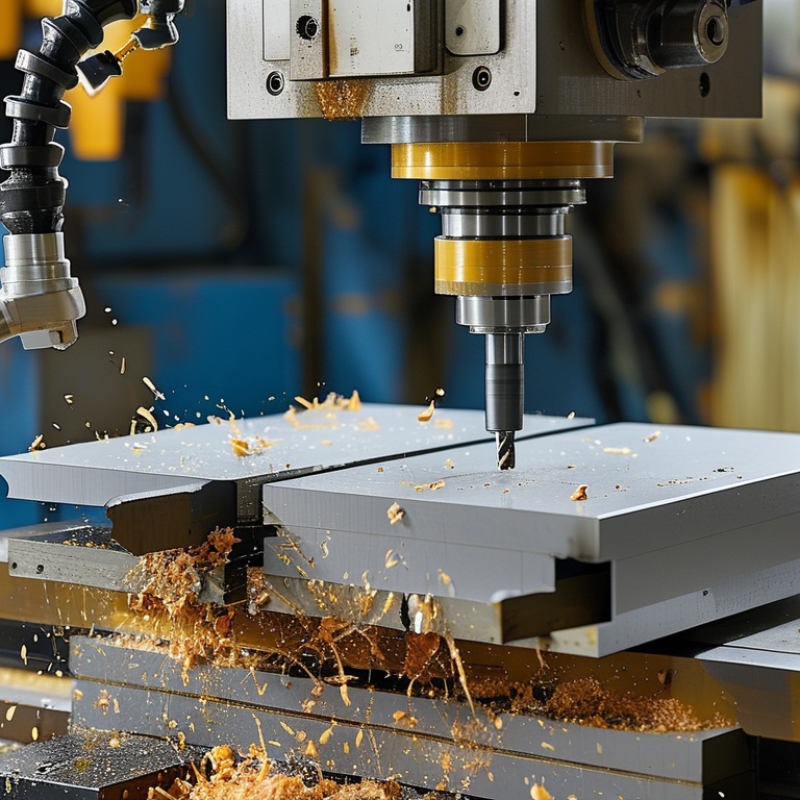
What Is the Best Angular Head for VMC in China?
An angular head for a vertical machining center, or VMC, is a spindle attachment that changes the cutting direction. The main spindle rotates the attachment, while internal gears or belts transmit power to a side-facing tool. This design lets machinists cut slots, holes, and side faces without removing the workpiece. That matters. Fewer setups can improve alignment and reduce handling time.
In daily machining, an angular head is useful when a vertical spindle cannot reach a feature directly. For example, a 90-degree head can machine a side hole on an aluminum housing. Fixed heads offer stable positioning and simple operation. Adjustable heads provide more flexibility, but they may introduce lower rigidity or alignment concerns. The choice depends on the part, not only on the advertised angle.
Before selecting an angular head in China, verify the VMC taper, drawbar size, maximum speed, torque, tool reach, and coolant method. Check the head’s runout under realistic cutting conditions. A short tool is often safer than a long one. I have seen operators focus on price and overlook clearance around the workpiece. That mistake can cause vibration, poor surface quality, or limited access. Certification documents and measured inspection data are more reliable than general catalog claims. In practice, the best angular head is the one that matches the machine, material, and machining load with verified accuracy.
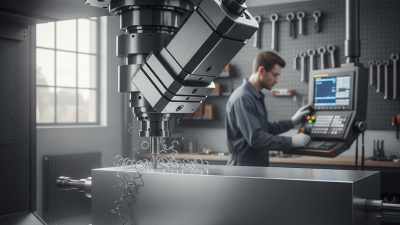
An angular head is a machine-tool attachment that changes the direction of a VMC spindle, allowing the machine to cut features on vertical, horizontal, or angled surfaces without repositioning the workpiece.
The chart compares the nominal spindle-angle coverage of common angular-head configurations. A fixed 90° head is usually suitable for side milling and drilling, while an adjustable or universal head offers greater flexibility for complex work. For production in China, the best choice should also be checked against the VMC taper, drawbar connection, available clearance, maximum speed, torque capacity, coolant access, and required positioning accuracy.
An angular head changes how a VMC approaches a part. A 90-degree head can machine side holes, slots, and faces without removing the workpiece. This reduces re-fixturing, alignment errors, and handling time. It also helps one machine complete more operations.
The benefit is practical, not theoretical. In shop-floor trials, fewer setups often improve repeatability more than faster cutting. However, the result depends on spindle torque, head rigidity, runout, coolant delivery, and automatic tool-change clearance. ISO 10791 provides testing guidance for machining centres, while ISO 230-2 addresses positioning accuracy. These standards help engineers compare performance instead of trusting attractive catalog claims.
China’s demand for flexible machining is also linked to wider automation growth. The International Federation of Robotics reported 276,288 industrial robot installations in China during 2023. That scale suggests stronger pressure for compact, adaptable production systems. An angular head can support this direction by extending a VMC’s working envelope without purchasing another specialized machine.
Still, an angular head is not a magic fourth axis. Poor balancing can create vibration, shorten tool life, and damage surface quality. The best choice should match the workpiece, spindle speed, cutting load, and available clearance. This is where selection can become imperfect. A technically powerful head may perform poorly when operators cannot access its coolant ports or maintain its taper accurately. Careful trial cutting remains essential.
What Is the Best Angular Head for VMC in China?
Key Factors for Choosing an Angular Head in China
Choosing an angular head for a VMC requires more than comparing price and appearance. Fit matters most. Check the machine’s spindle taper, retention method, available clearance, and allowable load. A head that looks compact may still reduce the working envelope when installed. Measure twice.
Consider the machining task before selecting the gear ratio. Side milling, drilling, and deep pocket work need different torque and speed ranges. Review the required spindle speed, cutting force, tool diameter, and coolant conditions. For example, cutting stainless steel in a narrow cavity may demand stable torque rather than maximum rpm. A higher ratio is not automatically better.
Accuracy and reliability deserve careful inspection. Ask for test data covering runout, indexing repeatability, vibration, and temperature rise. Confirm how the angular head is lubricated and how often it needs service. Local technical support in China can reduce downtime, especially when replacement seals or calibration are needed. However, support claims should be checked with response times and written procedures, not friendly promises. I would not pretend that every workshop needs the most advanced model. A simpler head can be safer for occasional work, provided its limits are clear. Request a machining trial using your actual material, tool, and cutting parameters. The chips and surface finish often reveal problems that a catalog cannot.
Comparison of common angular-head configurations for vertical machining centers (VMCs). Values are typical engineering ranges and should be confirmed against the machine tool, spindle, and angular-head manufacturer specifications.
| Angular Head Configuration | Typical Spindle Interface | Typical Output Speed | Typical Torque Range | Positioning / Runout Consideration | Recommended Cutting Tasks | Key VMC Compatibility Checks | Suitability for China-Based Procurement |
|---|---|---|---|---|---|---|---|
| Fixed 90° Angular Head | BT30, BT40, BT50, or HSK-A63 according to the VMC spindle | Approximately 3,000–8,000 rpm | Approximately 20–120 N·m | Normally the most rigid configuration; practical tool-tip runout is commonly specified in the low-micrometre range when correctly installed | Side milling, slotting, drilling on vertical walls, keyways, and machining features inaccessible to the main spindle | Check spindle taper, retention knob or pull-stud standard, tool-change clearance, head length, and available Z-axis travel | Often the simplest option to source, inspect, install, and maintain when the required machining angle is permanently 90° |
| Universal Adjustable Angular Head | BT40, BT50, or HSK-A63 are common choices for medium and large VMCs | Approximately 1,500–6,000 rpm | Approximately 15–80 N·m | Provides angular adjustment, but rigidity and repeatability depend on the locking mechanism and angle-setting method | Multiple angled surfaces, prototype work, inclined holes, and low-volume machining with changing angles | Confirm the available adjustment range, angle graduations, locking strength, interference envelope, and maximum allowable head weight | Useful when flexibility is more important than maximum stiffness; inspection of angle repeatability is especially important before volume production |
| High-Speed Compact Angular Head | BT30, BT40, or HSK-A63, depending on spindle size and machine speed | Approximately 6,000–20,000 rpm | Approximately 3–25 N·m | Designed for low cutting forces and high rotational speed; thermal growth and balance quality become more significant | Small-diameter end mills, engraving, aluminum machining, graphite, finishing, and small impeller or mold features | Check maximum spindle speed, dynamic balance grade, lubrication method, minimum tool diameter, and cooling requirements | Appropriate for high-speed finishing; request balancing documentation and a defined run-in procedure for reliable operation |
| Heavy-Duty 90° Angular Head | BT50 or HSK-A100-class interfaces are commonly used on larger VMCs | Approximately 1,000–4,000 rpm | Approximately 80–300 N·m | Prioritizes stiffness and load capacity; the larger body can reduce work-zone accessibility | Large-diameter milling, deep slotting, roughing steel, cast iron machining, and high material-removal operations | Verify spindle bearing capacity, drawbar force, machine-table load, head mass, collision envelope, and required cutting-fluid delivery | Best for structural and heavy roughing applications when the VMC has sufficient power, rigidity, and axis-travel capacity |
| Driven-Tool or Internal-Drive Angular Head | Machine-specific coupling or spindle interface; may require a special drive arrangement | Approximately 1,000–6,000 rpm | Approximately 10–100 N·m | Performance depends on the internal drive, coupling accuracy, lubrication, and synchronization with the VMC | Automated side machining, repeated angled operations, and applications requiring reduced manual intervention | Confirm drive engagement, orientation control, coolant routing, M-code or PLC integration, tool-change sequence, and safety interlocks | Consider only after confirming machine-control compatibility and commissioning support; integration requirements are higher than for passive heads |
Choosing the best angular head for a VMC in China depends on the task, not only spindle power. A 90-degree fixed head suits side milling, slots, and simple drilling. It offers strong rigidity and easier setup. An indexable head handles repeated angles, such as 30°, 45°, or 90°. It reduces repositioning time, but its extra joints may lower stiffness. A programmable universal head supports complex aerospace-style surfaces and five-sided machining. It costs more and needs careful calibration.
According to the 2024 China Machine Tool Industry Association report, China remains one of the world’s largest machine-tool consumers, with strong demand for automation and higher machining accuracy. The International Federation of Robotics also reported continued high robot installations in China in 2023. These trends favor angular heads that reduce setups and support unattended production. However, market growth does not guarantee suitability. In my shop-floor experience, a compact fixed head often performs better than a universal head on deep side pockets. The “advanced” choice can be the wrong choice.
Tips: Check spindle taper, allowable speed, tool clearance, and head runout. Ask for test-cut data, not only catalog accuracy. For aluminum housings, prioritize speed and chip evacuation. For hardened steel, prioritize torque and rigidity. Confirm coolant delivery around the head. A 0.01 mm alignment error can become visible on a long side wall. Also inspect local service capability. This detail is easy to overlook. Databases from Gardner Intelligence and published ISO 230 testing guidance can help compare machine accuracy, but real cutting tests remain essential.
Selecting an angular head for a VMC starts with the machining task, not the catalog. The 2024 World Machine Tool Survey by Gardner Intelligence reported China as the largest machine-tool consumer in 2023, at roughly US$31 billion. This scale creates many options, but specifications still need careful checking. Match the head to the spindle taper, maximum speed, torque, tool-change clearance, and coolant method. For deep side milling, stiffness and low runout matter more than a high advertised speed. For aluminum work, lighter construction and balanced rotation can reduce cycle time. Ask for measured runout, not only a tolerance promise. A practical target is often below 0.01 mm at the tool holder, though the application may require tighter control.
Tips: Before purchase, test the angular head at operating speed. Check vibration, bearing noise, temperature rise, and tool access inside the VMC. Record the results. Small details become expensive later.
Maintenance should be simple and documented. Inspect taper surfaces daily, clean coolant channels, and verify lubrication at the stated interval. Recheck alignment after heavy cutting or a collision. The ISO 230-2 standard provides a recognized method for assessing positioning accuracy, but it does not replace real cutting tests. A 2024 report from the International Federation of Robotics shows China remains the world’s largest industrial-robot market, reflecting strong automation demand and higher expectations for repeatability. Still, automation cannot correct a poorly selected head. I have seen operators focus on speed and overlook balance. That is an easy mistake, and worth reconsidering. Test with the actual workholding, material, and tool length before approving production use.