- sales@bjbod.com
- Mon - Sat at 7:00AM to 9:00PM
Inquiry
Form loading...
Choosing the best Angle Milling Head in 2026 is not a matter of picking the highest speed or lowest price. The right head must fit the machine, the part, and the actual cutting load. A head that looks impressive on a specification sheet may struggle when a long cutter reaches into a tight pocket.
Deloitte’s 2025 smart manufacturing survey of 600 manufacturing executives found that 92% expect smart manufacturing to drive competitiveness over the next three years. That broader shift makes dependable machining choices more important, but it does not identify one winning attachment. The practical comparison starts with spindle interface, torque, speed range, angular positions, tool clearance, and service support. A few degrees of extra access can prevent a costly setup change. Poor rigidity, however, can leave chatter marks on an otherwise well-machined surface.
This guide examines what “best” means across real shop conditions, from compact five-axis work to occasional angled drilling on a conventional mill. It also separates useful specifications from marketing language and considers total ownership cost, not just purchase price. There is no universal winner. Sometimes the best choice is simply the head your team can set up accurately, maintain, and use without fighting the machine. That deserves a closer look.
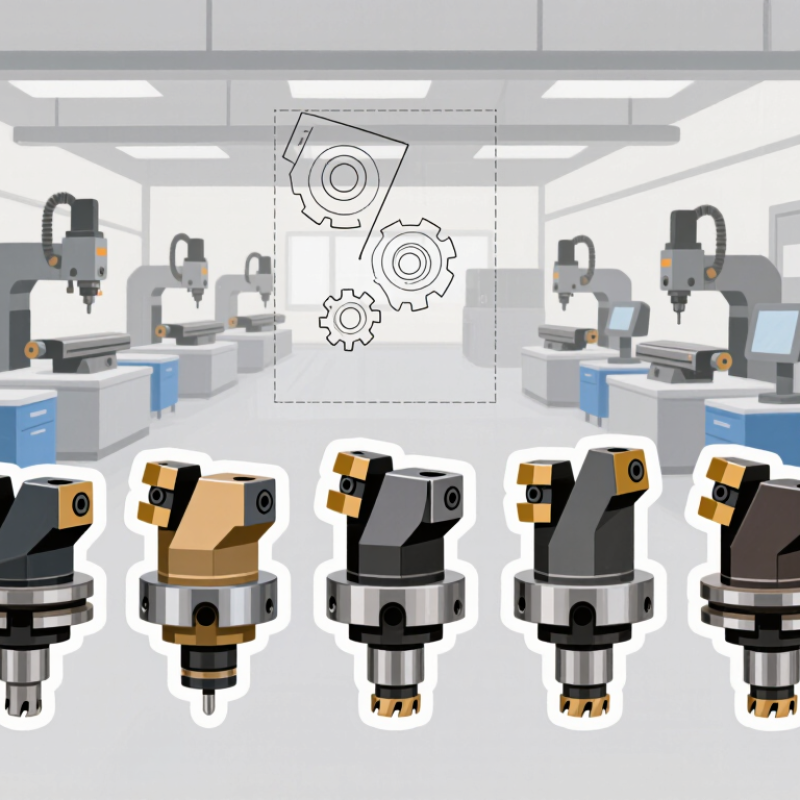
An angle milling head is an attachment that redirects a machine tool’s spindle rotation, allowing a cutter to approach the workpiece from a different direction. Instead of repositioning a large part, an operator can often machine a side face, angled surface, or feature inside a tight enclosure. It is compact, but not simple.
Inside the housing, gears transfer rotation from the machine spindle to the output spindle, which holds the cutting tool. The head mounts to the machine, and its orientation determines the cutter’s approach. Some heads provide a fixed angle; others can be adjusted or indexed. During a cut, gear contact, bearing support, and housing stiffness all affect vibration and accuracy. A faint chatter mark may signal a setup problem, not merely a dull tool.
Good setup matters. Check the machine’s interface, available clearance, tool length, and cutting-load limits before machining. Keep the tool as short as practical. Verify alignment with a test cut when tolerances are tight. The head may save time, though it can add setup steps and reduce rigidity compared with direct spindle cutting. That trade-off is easy to overlook. Every machine and operation behaves differently, so a cautious trial cut is often more informative than relying on specifications alone.
| Head Type | Typical Orientation | How It Works | Common Applications | Main Advantages | Key Limitations |
|---|---|---|---|---|---|
| Fixed 90-degree head | Positions the cutting-tool axis at 90° to the machine spindle axis. | Gears inside the head transfer rotation from the machine spindle to a perpendicular output spindle. | Side milling, drilling, or tapping on faces that are difficult to reach with the main spindle. | Simple setup and repeatable orientation; useful for machining side features without repositioning the workpiece. | Provides one fixed working direction. Available speed, torque, tool clearance, and supported operations depend on the specific head and machine. |
| Adjustable-angle head | Can be set to selected angles within its specified adjustment range; the range varies by design. | A swiveling head changes the output-spindle direction. The head is set and secured before machining. | Angled holes, slots, and surfaces when the required direction is neither parallel nor perpendicular to the main spindle. | Offers more positioning flexibility than a fixed head and can reduce workpiece reorientation. | Angle setting and locking must be rigid. Confirm the head’s actual angular range, clearance, and allowable cutting load. |
| Universal or multi-axis swivel head | Can be oriented in more than one plane, subject to its design and machine interface. | Multiple swiveling joints let the operator direct the output spindle toward different workpiece faces. | Complex parts, multi-face machining, and setups where access direction changes between features. | Broad orientation capability can reduce setups and help reach features that are difficult to access. | More joints and setup choices require careful positioning and clamping. Practical reach and stiffness depend on the configuration. |
| Straight or extension head | Keeps the output spindle approximately parallel to the machine spindle while extending reach. | Internal gearing transfers spindle rotation to a tool held farther from the machine spindle nose. | Reaching recessed or obstructed features where a standard toolholder lacks clearance. | Can improve access to deep or obstructed areas without changing the workpiece orientation. | Extra reach can increase tool and assembly deflection. Check overall length, clearance, and permissible cutting conditions. |
| How an angle milling head works | The output tool axis is redirected relative to the machine spindle axis. | The machine spindle drives the head through its input connection; internal transmission components rotate the output spindle and cutting tool. | Machining features on angled, side-facing, or otherwise obstructed surfaces. | Can allow additional machining directions without moving the workpiece to a different machine setup. | The head adds length and mass to the tool assembly. Its limits may differ from those of the machine spindle. |
| Machine compatibility checks | Must match the machine’s spindle interface and the intended machining orientation. | Compatibility depends on the input connection, retention method, available clearance, and machine control or indexing arrangements. | Any installation of an angle head on a milling machine or machining center. | Checking compatibility before purchase helps avoid fit, retention, and access problems. | Verify spindle taper and retention, maximum speed, allowable torque, head mass, coolant provision, toolholder system, and machine clearance. |
| How to choose the best head | Select the orientation that reaches the required feature with adequate clearance. | Match the head’s motion and transmission limits to the operation, machine, workpiece, and cutting tool. | Production milling, drilling, tapping, or other operations permitted by the head manufacturer. | A fixed head may suit repetitive 90° work; an adjustable or universal head may suit varied angles and access directions. | There is no single best type for every job. Confirm the specific head’s speed, torque, rigidity, angular range, and approved operations. |
| Note: Specifications and capabilities vary by head design and machine. Use the head and machine manufacturers’ instructions to confirm operating limits and safe setup before machining. | |||||