- sales@bjbod.com
- Mon - Sat at 7:00AM to 9:00PM
Inquiry
Form loading...
Oil mist is no longer a minor workshop nuisance. It affects air quality, machine cleanliness, maintenance costs, and worker confidence. MarketsandMarkets’ 2024 Industrial Air Filtration Market report identifies manufacturing as a major demand sector, driven by stricter workplace controls and cleaner production goals. Grand View Research also links industrial filtration growth with expanding machining and metalworking activities. However, market boundaries differ between reports. Some include electrostatic collectors, while others focus only on centralized systems. That makes simple manufacturer rankings less reliable.
For global buyers, an Oil Mist Purifier should be judged beyond catalogue airflow. Capture efficiency, pressure drop, filter loading, noise, drainage, and replacement intervals matter on a real factory floor. A CNC cell may need compact source capture, while a high-speed grinding line may require stronger airflow and staged filtration. OSHA’s 29 CFR 1910.1000 lists a 5 mg/m³ permissible exposure limit for mineral oil mist, but local requirements can differ. Buyers should verify applicable national limits before approval. The NIOSH Pocket Guide provides additional exposure-control references, although it should not replace site-specific industrial hygiene testing.
This guide compares 10 Oil Mist Purifier manufacturers serving international markets. It considers product engineering, testing transparency, service coverage, spare-parts access, and documented operating experience. Certifications help, but they do not guarantee equal performance in every application. That is the uncomfortable part. A purifier that performs well in one plant may struggle with heavy coolant loads elsewhere. Buyers should request measured test data, installation references, and lifecycle cost details before signing a purchase order.
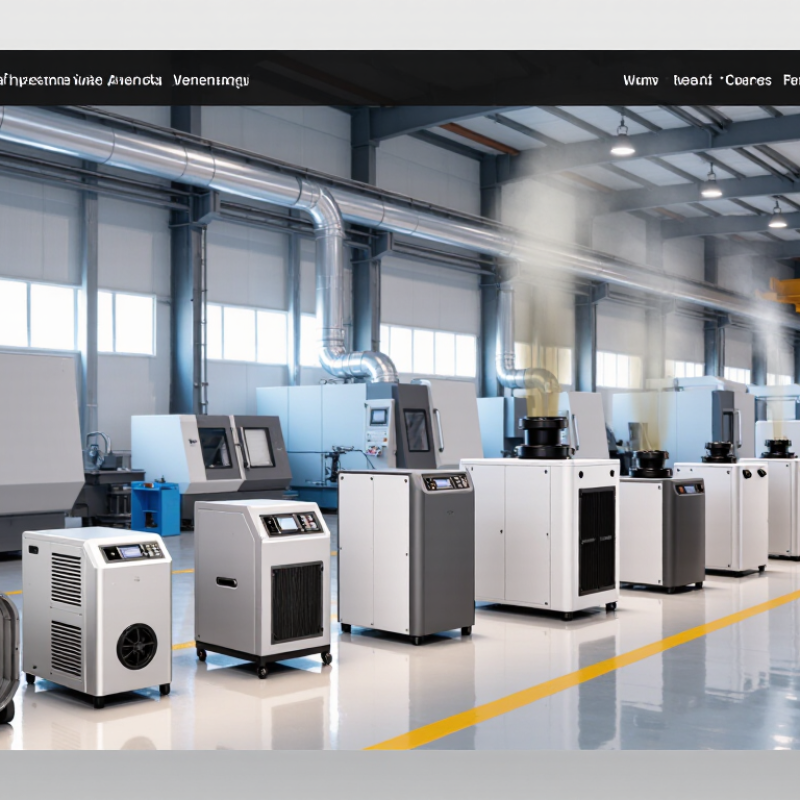
Oil mist purifiers capture airborne droplets produced during cutting, grinding, lubrication, and high-speed machining. Unlike ordinary dust collectors, they must handle liquid aerosols, not only dry particles. A typical unit draws contaminated air through a pre-filter, where larger droplets lose speed and drain into a collection tray. Finer droplets then pass through coalescing media. These fibers merge small droplets into larger ones, allowing gravity to remove them. Some systems add electrostatic or high-efficiency filtration for submicron particles.
The target is practical exposure control. The NIOSH Pocket Guide lists a recommended exposure limit of 5 mg/m³ for mineral oil mist over an eight-hour workday. OSHA also lists 5 mg/m³ as the permissible exposure limit for mineral oil mist. These figures support source capture, but they do not replace workplace monitoring. A purifier’s rated airflow must match the enclosure volume and machining process. Filter pressure also rises as oil accumulates. Small details matter.
A clean exhaust outlet can mislead. Poor seals, saturated filters, or turbulent ducting may return mist to the operator’s breathing zone. In field inspections, drain lines are often overlooked. That is a design weakness. Regular visual checks, differential-pressure readings, and documented filter changes improve reliability. No purifier removes every hazard. Its performance depends on installation, maintenance, and realistic testing under production conditions.
| Rank | Oil Mist Purifier Type | Definition | Primary Working Principle | Typical Particle or Droplet Range | Common Application | Typical Filtration Stages | Key Selection Factor | Maintenance Consideration |
|---|---|---|---|---|---|---|---|---|
| 1 | Mechanical Coalescing Type | Equipment that removes liquid oil aerosols by combining very small droplets into larger droplets that can be drained. | Oil-laden air passes through fibrous or mesh media. Impaction, interception, and diffusion cause droplets to merge and separate from the airflow. | Approximately 1–10 μm droplets, depending on media design and airflow conditions. | Machining centers, CNC lathes, grinding operations, and enclosed metalworking equipment. | Pre-filter, coalescing filter, and final particulate filter. | Required airflow, oil viscosity, aerosol concentration, and pressure drop. | Drain collected oil regularly and replace saturated filter elements before pressure drop becomes excessive. |
| 2 | Electrostatic Precipitator Type | A purifier that uses an electrical field to charge and collect airborne oil particles on collection plates. | Particles are electrically charged in an ionizing section and then attracted to oppositely charged collector plates. | Often effective for submicron particles and fine oil smoke when correctly sized and maintained. | High-speed machining, metal stamping, turning, and applications producing fine oil smoke. | Pre-filter, ionizing section, collection cells, and optional activated-carbon stage. | Particle size distribution, electrical safety requirements, and allowable ozone emissions. | Collection plates and ionizing wires require periodic cleaning to maintain collection efficiency. |
| 3 | Centrifugal Type | A compact purifier that separates oil droplets from air through rotational motion and centrifugal force. | A fan or rotor creates a swirling airflow. Higher-density oil droplets move toward the housing wall, coalesce, and drain away. | Generally most suitable for larger droplets and moderate-to-heavy oil mist loads. | Machine tools using flood coolant or cutting oil, especially where space is limited. | Inlet separator, rotating section, demisting element, and drainage system. | Air volume, rotor speed, droplet size, and resistance to coolant contamination. | Inspect the rotor, housing, drain line, and seals for buildup or blockage. |
| 4 | Cyclonic Type | A purifier that uses a cyclone-shaped chamber to separate liquid droplets and coarse particles from contaminated air. | Tangential airflow creates a vortex. Centrifugal force drives heavier droplets toward the cyclone wall, where they flow to a collection point. | Typically more effective for larger droplets and particles than for very fine oil smoke. | Pre-separation before fine filtration, heavy-duty machining, and systems with high liquid loading. | Inlet duct, cyclone chamber, drain vessel, and downstream fine filter. | Pressure drop, inlet velocity, liquid loading, and required downstream efficiency. | Remove accumulated sludge and verify that the drain remains open and properly sealed. |
| 5 | Bag or Pocket Filter Type | A fabric-based filtration system that captures oil mist and particulate matter inside or on the surface of flexible filter pockets. | Contaminated air flows through synthetic or glass-fiber media. Particles are retained by interception, inertial impaction, and diffusion. | Performance varies widely by filter class, media structure, and operating velocity. | Central extraction systems and large workshops with multiple machining sources. | Coarse pre-filter, multi-pocket filter, fine filter, and optional odor-control stage. | Media compatibility with oil, filter surface area, fire risk, and replacement availability. | Monitor differential pressure and replace bags when loaded or chemically degraded. |
| 6 | Cartridge Filter Type | A purifier using pleated cylindrical filter cartridges to provide a large filtration area in a compact housing. | Oil mist passes through pleated media. Droplets and particles are retained by mechanical filtration and may coalesce on treated media. | Suitable performance depends on media rating; fine filtration can target small aerosol particles. | Standalone machine-tool extractors, compact systems, and centralized mist collection. | Metal-mesh or disposable pre-filter, pleated cartridge, and optional final filter. | Cartridge media, air-to-cloth ratio, cleanability, and compatibility with coolant type. | Check differential pressure, clean reusable cartridges where permitted, and replace damaged media. |
| 7 | HEPA Final-Filter System | A high-efficiency final-stage system designed to remove very fine particles after upstream oil and liquid separation. | Fine particles are captured through diffusion, interception, and inertial impaction within a dense fiber medium. | HEPA filters are commonly tested against particles near 0.3 μm, the most penetrating particle size for many test methods. | Clean manufacturing areas, laboratories, sensitive production zones, and final air polishing. | Oil separator, pre-filter, fine filter, and HEPA final filter. | Upstream oil loading, certified test standard, leakage control, and pressure drop. | HEPA filters should not be exposed to heavy liquid loading; upstream stages must be maintained carefully. |
| 8 | Activated-Carbon Odor-Control Type | A polishing stage that reduces gaseous contaminants and odors associated with oil, coolant, and thermal degradation products. | Porous activated carbon adsorbs many organic vapors and odor molecules after liquid mist has been removed upstream. | Designed mainly for vapors and odor molecules rather than bulk liquid droplets. | Indoor machining areas, enclosed production cells, and applications requiring improved workplace air quality. | Coalescing pre-filter, particulate filter, activated-carbon bed, and optional final filter. | Carbon quantity, contaminant concentration, humidity, contact time, and breakthrough risk. | Replace carbon when odor breakthrough occurs or according to validated service-life monitoring. |
| 9 | Wet Scrubber Type | A gas-cleaning system that contacts contaminated air with a liquid to capture oil mist and soluble or particulate contaminants. | Sprays, packed sections, or impingement devices transfer contaminants from air into a scrubbing liquid; a mist eliminator removes entrained droplets. | Performance depends on scrubber design, liquid-to-gas ratio, and droplet size distribution. | Large centralized systems, high-temperature exhaust, and processes with mixed gaseous and particulate contaminants. | Inlet separator, spray or packed scrubber, liquid reservoir, mist eliminator, and discharge treatment. | Water or liquid consumption, wastewater handling, corrosion resistance, and pressure drop. | Control liquid quality, clean nozzles and packing, and manage contaminated wastewater responsibly. |
| 10 | Hybrid Multi-Stage Type | A purifier combining two or more separation technologies to address coarse droplets, fine mist, particles, and odors in one system. | Different stages apply complementary mechanisms, such as centrifugal separation, coalescing filtration, electrostatic collection, and adsorption. | Can cover a broad contaminant range when each stage is correctly selected and sequenced. | Complex machining lines, mixed coolant operations, centralized extraction, and demanding indoor-air applications. | Pre-separator, coalescing or electrostatic stage, fine filter, activated carbon, and optional HEPA filter. | Overall airflow balance, stage compatibility, lifecycle cost, and monitoring requirements. | Maintain each stage separately and use differential-pressure or air-quality monitoring to optimize service intervals. |