Top 10 Methods for Efficient Processing Of Parts?
Efficient processing of parts is crucial in today's manufacturing landscape. Many companies seek to improve productivity and reduce waste. With advancements in technology, various methods emerge, optimizing the processing of parts.
Understanding the significance of efficient processing methods is essential. These approaches can enhance precision and speed while lowering costs. However, not every method fits every scenario. Companies must assess their specific needs carefully.
Exploring diverse approaches opens avenues for innovation. Some methods may prove challenging to implement or require training. Continuous evaluation is vital. Embracing improvement in the processing of parts can lead to substantial benefits, but success demands effort and careful consideration.
Understanding the Importance of Efficient Parts Processing
Efficient parts processing is crucial in manufacturing. It directly impacts productivity, cost, and quality. According to a study by McKinsey, optimized processing can boost efficiency by up to 30%. This highlights a pressing need for businesses to embrace best practices.
Understanding workflows is a step many overlook. Poor workflow design can cause delays and errors. In fact, a report from the National Association of Manufacturers indicated that inefficient processes result in a waste of nearly $100 billion annually. Real-time data tracking could address this issue, yet many companies still lack the necessary tools.
Moreover, workforce training is often neglected. Employees need to understand the processes well. Lack of training can lead to mistakes. The Work Institute reported that companies lose over $600 billion in turnover costs. Investing in employee skills may seem costly, but the returns are often greater than expected. Improved processing also reduces waste, leading to a greener operation. These factors are interconnected, and overlooking them can hinder overall success.
Top 10 Methods for Efficient Processing of Parts
Method 1: Lean Manufacturing Principles for Parts Processing
Lean manufacturing focuses on minimizing waste while maximizing productivity. By adopting lean principles, parts processing can become significantly more efficient. Start by identifying areas of waste: excess movement, overproduction, and waiting time. These areas slow down production and add costs. For instance, a workshop might find that employees spend too much time searching for tools. A simple solution is organizing tools neatly within reach.
Value stream mapping is another powerful lean tool. It allows teams to visualize processes and identify bottlenecks. Once these problem areas are highlighted, teams can brainstorm solutions. Implementing changes can take time and may disrupt the workflow initially. However, these adjustments often lead to smoother operations in the long run.
Moreover, continuous improvement is key. Regularly reviewing processes ensures that any new issues are quickly addressed. Teams must embrace a culture of feedback. It’s crucial to allow workers to voice concerns and suggest improvements. This approach may feel uncomfortable at first, but it can lead to significant advancements. Lean principles offer a path to enhanced efficiency in parts processing, but they require ongoing commitment and reflection.
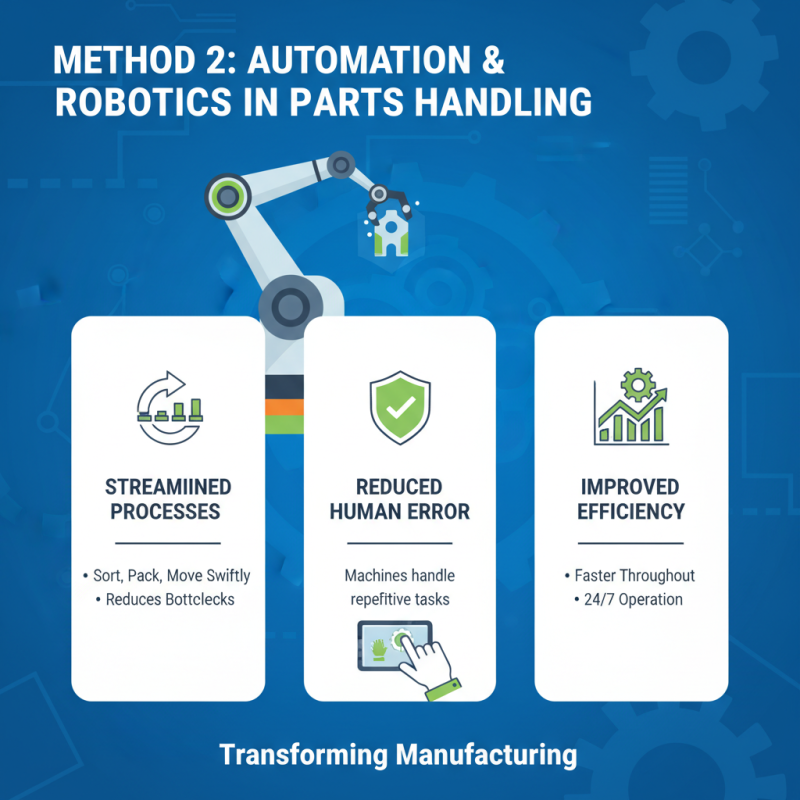
Method 2: Automation and Robotics in Parts Handling
Automation and robotics are transforming parts handling. These technologies streamline processes and reduce human error. With machines taking over repetitive tasks, efficiency improves. Automated systems can sort, pack, and move parts swiftly. This reduces bottlenecks in production lines.
However, there are challenges. Initial costs for automation can be high. Training employees to work alongside robots is essential. Not every process is suitable for automation. Some intricate tasks still require a human touch. Reflection on these limitations can lead to better integration strategies.
Despite the hurdles, the benefits are evident. Robotics can increase output significantly. Facilities equipped with automation often report shorter lead times. Regular updates and maintenance of robotic systems are crucial. Investing in these areas will ensure long-term success. Exploring various models of automation can provide insights into optimal practices.
Method 3: Implementing Just-in-Time (JIT) Inventory Systems
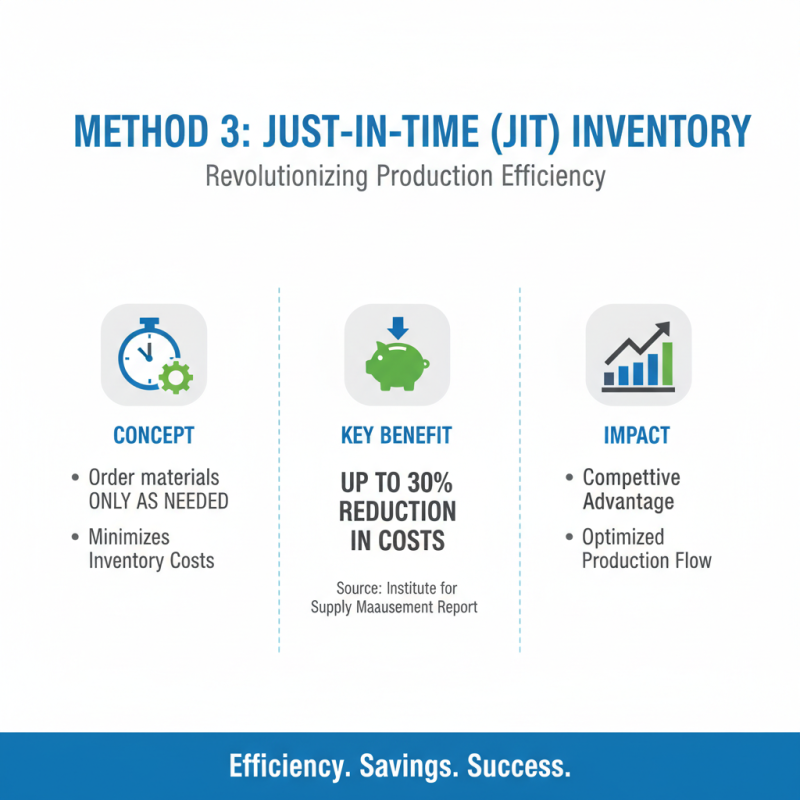
Just-in-Time (JIT) inventory systems are revolutionizing production efficiency. This method minimizes inventory costs by ordering materials only as needed. According to a report by the Institute for Supply Management, companies using JIT often see up to a 30% reduction in inventory costs. This is a significant advantage in today’s competitive market.
Implementing JIT requires precise planning and coordination. It can lead to disruptions if not managed correctly. Systems must be in place to respond to demand fluctuations swiftly. When a supplier falls short, production can stall. Additionally, reliance on JIT can mean less buffer stock available, causing potential risks. A survey from Supply Chain Dive found that 70% of businesses experienced challenges with supplier reliability when adopting JIT.
While the benefits are clear, the risks cannot be ignored. Organizations must assess their readiness. The approach needs a strong data infrastructure. Regular evaluations of supply chain partners are crucial. JIT encourages efficiency, but it also demands resilience against unexpected market changes. This balance between agility and risk management is essential for long-term success.
Method 4: Utilizing Computer-Aided Manufacturing (CAM) Technologies
In today's manufacturing landscape, Computer-Aided Manufacturing (CAM) technologies offer transformative advantages. Companies that embrace CAM report efficiency gains of up to 30%. This software integrates design and manufacturing processes seamlessly. It reduces errors and accelerates production timelines significantly. A recent study highlighted that CAM adoption resulted in a 25% reduction in lead times for new parts.
However, transitioning to CAM is not without challenges. Some manufacturers experience a steep learning curve. Employees must be trained properly to maximize the software's potential. Not all machines are compatible with advanced CAM systems, leading to additional costs. The initial investment can be daunting for small businesses, potentially limiting their ability to compete in a technology-driven market.
Despite these hurdles, the long-term benefits are compelling. CAM technologies enable precision in complex designs. The ability to simulate manufacturing processes can reveal flaws early, saving time and resources. A well-implemented CAM system can lead to a significant increase in production efficiency. Manufacturers must weigh the pros and cons, ensuring that they are equipped to fully leverage the capabilities of CAM.
Conclusion
Efficient processing of parts is crucial in modern manufacturing, as it directly impacts productivity and cost-effectiveness. In exploring the best methods for achieving this, the article outlines several key strategies. Lean manufacturing principles streamline workflows and eliminate waste, while automation and robotics enhance precision and speed in parts handling. Implementing Just-in-Time (JIT) inventory systems ensures that components are available when needed, reducing excess stock and storage costs. Furthermore, utilizing Computer-Aided Manufacturing (CAM) technologies helps to optimize design and production processes, and continuous improvement practices like Six Sigma foster a culture of quality and efficiency. By adopting these methods, businesses can significantly enhance their processing of parts, leading to increased competitiveness in the market.