
Choosing the right collet can decide whether a turned part runs true or chatters against the tool. Collets For Lathe come in several forms, and each suits different workholding needs. Spring collets offer quick changes and consistent grip within a defined size range. Jaw-style collets can handle broader diameters, while emergency collets may be machined for unusual profiles. The best choice depends on the spindle, stock shape, production volume, and required accuracy—not a catchy product label.
Machining author James A. Harvey’s practical guidance can be distilled into this shop-floor principle: “Match the workholding method to the part, then verify the setup.” This is a paraphrase, not a verbatim quotation. It captures an important habit: inspect the collet, clean its seating surfaces, and confirm the stock is held securely before cutting. A thin oil film or a small chip can spoil concentricity. The difference may show up as a faint runout mark, a rough finish, or a part that measures inconsistently.
There is no universal winner. For repeated bar work, a compatible spring collet may save time and provide reliable support. For varied diameters, another system could be more practical, though its changeover may take longer. Check the lathe manufacturer’s specifications and the collet’s rated range before choosing. Then test the setup with a dial indicator and a short trial cut. Real shops are not always textbook-perfect; worn parts and rushed changes happen. That is exactly why a careful comparison matters.
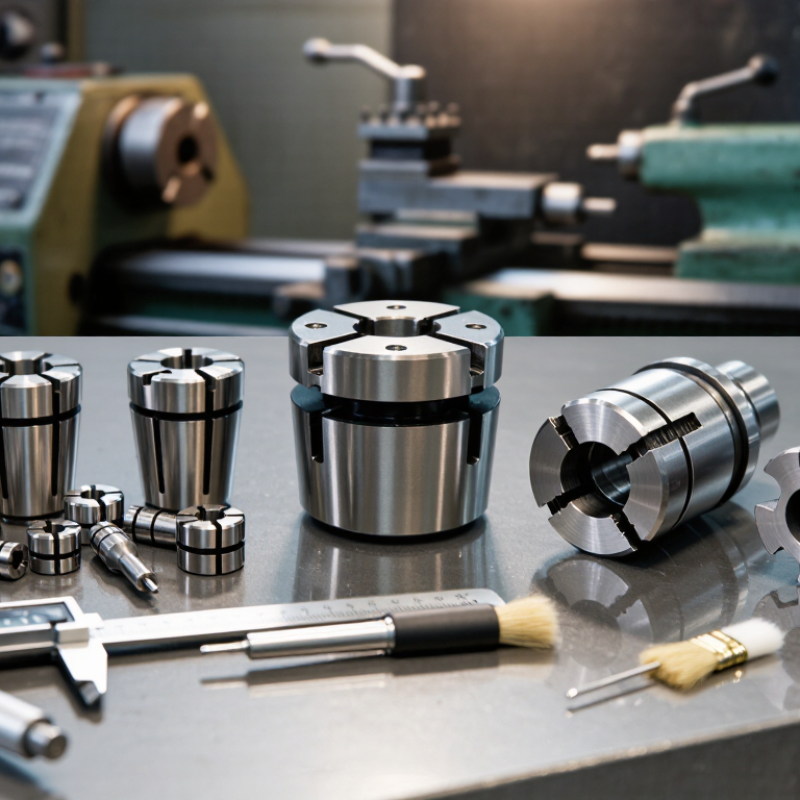
A lathe collet is a split sleeve that grips round stock inside a matching spindle or chuck. Its tapered outside fits a matching seat. As the collet is drawn into the taper, the sleeve contracts around the workpiece. Some systems use a push action instead, so the machine’s operating instructions matter.
The grip comes from contact around much of the stock’s circumference, rather than from a few isolated jaw points. This can help produce consistent positioning when turning several parts of the same diameter. It is not magic. A chip trapped inside the collet can tilt the stock and spoil concentricity. I would check the bore and taper, then wipe them clean before setup.
Choose a collet made for the workpiece diameter and the machine’s collet system. A close fit matters; a collet should not be forced to cover an unsuitable size range. Slide the stock in far enough to support the cut, but leave room for the tool and finished part. Tighten the drawbar or closing mechanism securely, without treating maximum force as a goal. That can distort thin stock. Even a careful setup may need a test cut and runout check, because worn or mismatched parts can still shift.
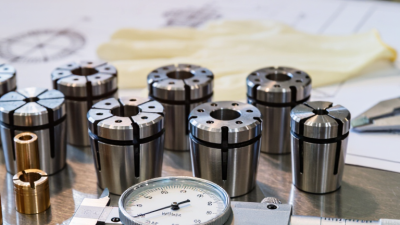
Lathe collets commonly include 5C, 3C, ER, and specialty step or emergency collets. The 5C type is widely used for bar work and general machining because it offers a broad gripping range and is easy to change. A 3C collet suits smaller stock, though its capacity is limited. ER collets are familiar from toolholding, but they can also hold workpieces in suitable lathe chucks. Check the chuck and spindle setup before assuming an ER system will fit.
Fit matters. Collets grip best when the workpiece diameter matches their rated range. A poorly matched collet may leave marks, allow movement, or run out of alignment. Step collets grip larger or irregular parts, while emergency collets can be bored to hold a specific shape. That flexibility has a trade-off: boring one incorrectly can make it unusable. Small details matter. Confirm the spindle nose, drawbar or drawtube arrangement, and maximum stock diameter before buying. A clean collet and a smooth, burr-free workpiece also help produce consistent results. One easy-to-miss detail is gripping length; very short contact can reduce stability, even when the diameter is correct.
Collet choice changes how firmly a lathe holds stock, how consistently it runs, and what diameters it can accept. A 5C collet grips round or hexagonal bar over a long contact area, making it useful for repeat production. ER collets offer a broader clamping range, but their grip depends on matching the collet closely to the workpiece diameter. Small details matter. Chips trapped in the taper can spoil seating and increase runout.
Capacity figures help narrow the choice. DIN 6499 dimensional tables give ER40 collets a maximum clamping diameter of 26 mm; common 5C dimensional tables list a maximum of 1⅛ inches, or about 28.6 mm. These are nominal limits, not promises of equal gripping quality at every size. Near a collet’s range limit, gripping force and repeatability may suffer. Check the actual workpiece diameter and the collet maker’s specified range.
Accuracy also depends on the spindle, collet condition, cleanliness, and setup. ISO 230-7 describes methods for assessing machine-tool spindle rotation accuracy, but a collet’s own runout must be checked in the assembled setup. Use a dial indicator on a clean test bar. A few microns can matter in precision work. In practice, I would not assume that a more flexible ER system is automatically less accurate; the fit and maintenance often decide the result.
How do common collet designs differ in grip, accuracy, and capacity?
Scores are qualitative comparisons on a 1–5 scale, not manufacturer specifications. Actual performance depends on the collet, workpiece, setup, and maintenance. 5C and ER collets suit a range of stock sizes; step and emergency collets can be tailored to unusual workpieces; expanding collets grip from the inside of a bore.
A 5C collet suits small and medium round, hexagonal, or square stock, especially when parts need repeatable positioning. It works well for turning pins, bushings, and short production runs. The long gripping surface helps distribute pressure. Keep enough material inside the collet; a tiny contact area can let slender stock slip or vibrate.
ER-style collets suit shops handling several nearby diameters, such as small shafts or instrument components. Their flexible size range can reduce changeovers, while a dedicated collet may grip one diameter more consistently. Check the chuck’s runout and the workpiece’s actual diameter, not just its nominal size. Small differences matter.
Soft or emergency collets can be bored to match unusual profiles, thin-wall tubes, or delicate finished surfaces. They are useful for secondary operations, such as facing a part without marking its exterior. They take setup time. And they may not stay accurate after repeated use. For heavy cuts or long bar stock, choose a collet and spindle system rated for the load, then test grip and runout on a sample part. A catalog chart cannot replace that check.
Choosing a lathe collet starts with the workpiece, not the catalog. Measure the stock diameter at several points, then match the collet’s capacity and nose profile to the job. ER collets suit varied diameters and general turning; 5C collets can be practical for bar work and repeat loading. For thin-walled parts, use a close-fitting collet to limit distortion. Fit matters more.
Check spindle-nose compatibility, clamping range, and required access for the tool. ISO 15488:2008 specifies dimensions for collets with an 8° taper for tool shanks; that figure is a compatibility detail, not a guarantee of cutting accuracy.
Ask for measured runout at the gripping point, and compare it with the tolerance on the part drawing. A small burr or chip inside the collet can spoil the result. Clean the bore and stock before testing.
Catalog runout is only a starting point; actual setup conditions can change it. One detail is easy to overlook: a collet gripping near the end of its range may hold less consistently, so test the real stock size before production.