Inquiry
Form loading...

How to Choose the Right Compressed Air Supply System for Your Needs?

Choosing the right Compressed Air Supply system is crucial for optimal efficiency in various applications. Many industries rely heavily on compressed air. It powers tools, helps in production, and drives automation. Selecting a system that suits your needs can be overwhelming.

Different factors come into play. The size of your operation matters. Small workshops may require less power compared to large manufacturing plants. Energy efficiency is another consideration. A system that uses less energy can lower operational costs. Additionally, think about maintenance needs. A reliable system should not demand excessive upkeep.

Many users overlook the importance of system design. An inappropriate setup can lead to inefficiencies and downtime. It's essential to evaluate your current and future demands. Understanding your requirements can help avoid costly mistakes. Investing time in choosing the right Compressed Air Supply system pays off in the long run.
How to Choose the Right Compressed Air Supply System for Your Needs?

Understanding Compressed Air Supply Systems: Types and Applications

Compressed air supply systems play a vital role in various industries, from manufacturing to automotive. There are different types, including reciprocating, rotary screw, and centrifugal compressors. Each has its unique applications and advantages. Understanding these types is crucial in making the right choice for your specific needs.

Tips: Assess your air demand. Calculate the required airflow in cubic feet per minute (CFM). Select a system that meets this demand efficiently.

Compressed air systems also vary based on oil-free and oil-lubricated designs. Oil-free systems are essential in industries like food and pharmaceuticals, whereas oil-lubricated systems suit heavy-duty applications. Evaluate the operational environment to choose wisely.

Tips: Regular maintenance is key to longevity. Check for air leaks, as they can waste energy and increase costs. Plan for periodic inspections.

Choosing the right system goes beyond specifications. Consider energy efficiency and noise levels. These factors impact day-to-day operations. Reflecting on system performance can yield significant long-term benefits.

How to Choose the Right Compressed Air Supply System for Your Needs?

System Type Common Applications Advantages Disadvantages Cost Estimate
Reciprocating Air Compressors Small workshops, pneumatic tools Cost-effective, simple to maintain Limited continuous use, noise $1,000 - $4,000
Rotary Screw Compressors Manufacturing, automotive, large workshops Continuous operation, high efficiency Higher initial cost, more complex maintenance $5,000 - $25,000
Scroll Compressors Laboratories, food processing, medical Quiet operation, minimal vibration Lower output capacity, more costly $3,000 - $10,000
Centrifugal Compressors Large-scale industrial applications High flow rates, low maintenance Expensive, requires skilled labor for installation $20,000 - $100,000+
Oil-Free Compressors Food and beverage, pharmaceuticals No contamination risk, cleaner air Higher operational costs, limited models $2,500 - $15,000

Assessing Your Air Demand: Calculating the Required Airflow Capacity

Determining your airflow capacity is crucial when selecting a compressed air supply system. Start by assessing your tools and equipment. Each device has specific requirements for airflow, measured in cubic feet per minute (CFM). Gather data on the CFM rating for each tool. Often, manufacturers provide this information in their specifications.

Next, consider how long each tool will operate during your workday. Calculate the total airflow needed by multiplying the CFM of each tool by the hours used. This helps you avoid a system that underperforms or oversupplies air.

It’s also important to think about the potential for future expansion. Will you add tools or upgrade existing equipment? Leave room for growth in your calculations. Check local regulations, too. Compliance with safety standards can influence your decision. Taking these factors into account will help ensure you choose a reliable compressed air system tailored to your actual demands.

Evaluating System Efficiency: Comparing Power Consumption and Performance

When evaluating a compressed air supply system, system efficiency plays a critical role. Comparing power consumption and performance is essential. Research indicates that compressed air systems can account for up to 30% of a facility's energy costs. This means a small difference in efficiency can lead to significant savings over time.

Consider using a variable speed drive (VSD) compressor. These systems can reduce energy consumption by 35% when compared to fixed-speed models. They adjust to real-time demand, leading to consistent pressure and less waste. A study from the U.S. Department of Energy highlights that managing compressed air systems efficiently can yield energy reductions of 10 to 30%.

Another important aspect is regular maintenance. Timely inspections can prevent inefficiencies due to leaks, which often go unnoticed. Even a small leak can waste approximately 30% of a compressor's output. Implementing a leak detection program is a proactive measure to enhance system reliability.

Tips: Regularly audit your compressed air system's efficiency. Engage a professional to assess power consumption metrics. Identify any areas for improvement and take action.

Selecting Components: Essential Parts of a Compressed Air System

How to Choose the Right Compressed Air Supply System for Your Needs?

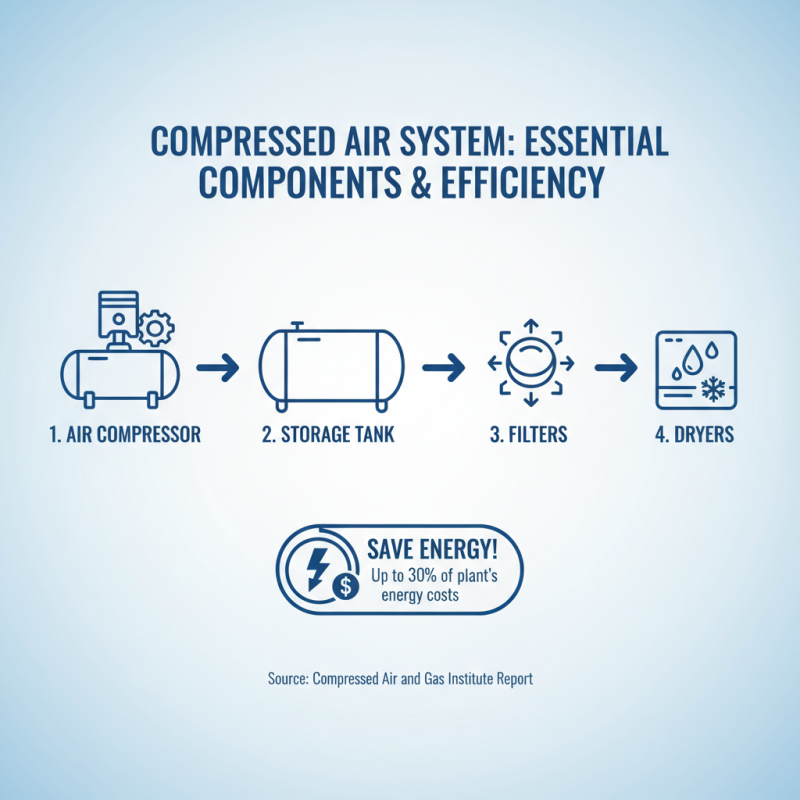
When selecting components for a compressed air system, clarity is key. Essential parts include the air compressor, storage tanks, filters, and dryers. According to a report by the Compressed Air and Gas Institute, compressed air systems can account for up to 30% of a plant's total energy costs. This emphasizes the importance of choosing efficient components.

The air compressor is the heart of the system. It transforms electrical energy into compressed air. When choosing a compressor, consider its capacity and duty cycle. The compressor must meet peak demand without excessive energy waste. Storage tanks help manage fluctuations in air demand, while filters and dryers ensure air quality. Neglecting these components can lead to moisture and contamination issues, ultimately harming your equipment.

Monitoring and maintaining these components is crucial. Many users underestimate the need for regular maintenance. A well-maintained system can reduce energy costs by up to 20%, according to industry analyses. Failure to replace worn-out parts can lead to system inefficiencies, increased downtime, and higher operational costs. A thorough understanding of each component is essential for optimal performance and reliability in your compressed air supply system.

Maintenance Considerations: Ensuring Longevity and Reliability of the System

How to Choose the Right Compressed Air Supply System for Your Needs?

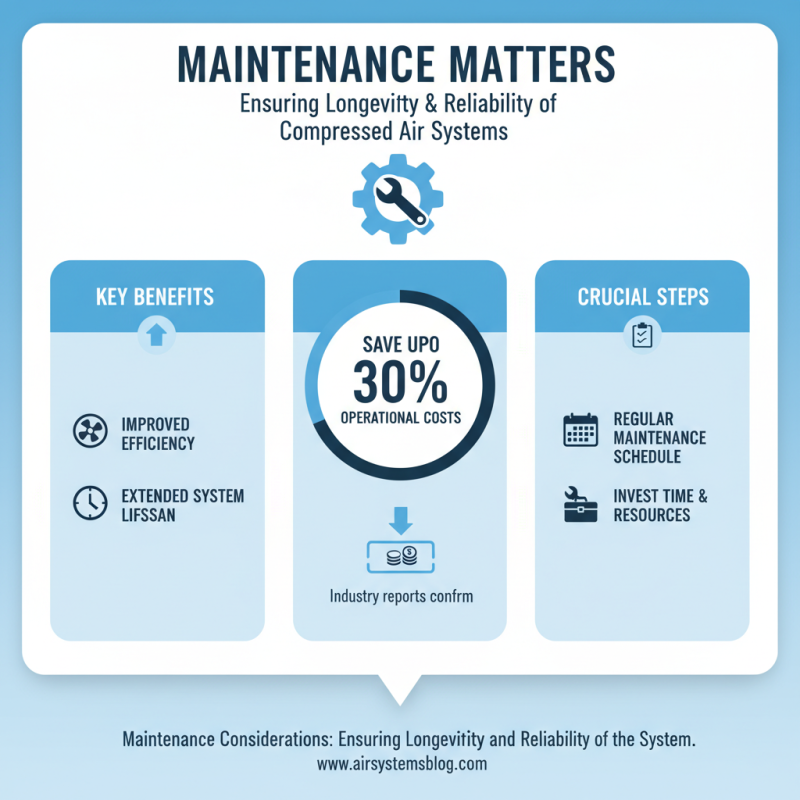
When selecting a compressed air supply system, maintenance is crucial. A well-maintained system provides better efficiency and longevity. According to industry reports, regular maintenance can reduce operational costs by up to 30%. This statistic highlights the importance of investing time and resources into a proper maintenance schedule.

One essential tip involves monitoring the air quality. Contaminants can harm both your system and your tools. Implementing filters and regular checks can prevent costly repairs. Regular checks should include inspecting hoses, fittings, and pressure gauges. Small leaks can lead to significant energy loss over time.

Another consideration is the frequency of system usage. Systems that operate continuously require more rigorous maintenance than those used sporadically. It’s vital to train staff on proper operation techniques. Inadequate knowledge can lead to neglect, resulting in system failure. If mistakes are made, recognize them as opportunities for improvement. Engaging in structured maintenance planning not only enhances reliability but also extends system life significantly.