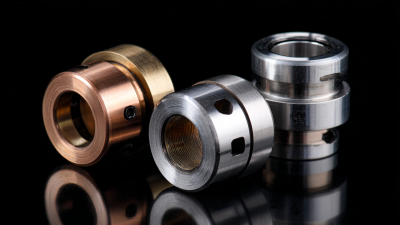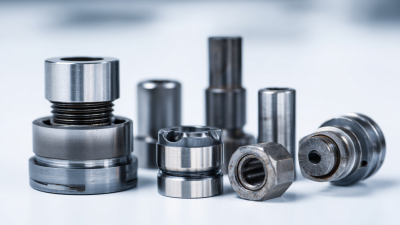
Choosing a reliable China Collet Manufacturer is not simply a matter of comparing prices. It is a technical decision that affects spindle accuracy, tool life, production stability, and long-term maintenance. A collet may look precise in a product photograph, yet perform poorly after repeated clamping cycles. Buyers should examine material certificates, heat-treatment records, grinding methods, runout data, and inspection procedures. Ask for measurable evidence, not attractive promises.
Manufacturing educator Dr. Serope Kalpakjian wrote, “Manufacturing is the transformation of materials into items of greater value.” This principle applies directly to collets. A qualified supplier transforms hardened steel into a component that grips consistently under real cutting forces. Look for a Collet Manufacturer with controlled production processes, experienced engineers, and documented quality standards. ISO certification can support credibility, but it does not replace practical verification. Request sample collets and test them on your own machine. Check concentricity with a dial indicator, inspect the gripping surface, and record results at different clamping pressures.
Communication also reveals much. Can the supplier explain tolerance limits clearly? Can they recommend ER, 5C, HSK, or custom designs without guessing? Can they provide replacement support after delivery? These details matter during urgent production schedules. Still, no supplier is perfect. Even a strong manufacturer may need clearer drawings or more realistic testing conditions. That is why evaluation should remain critical. The best choice combines verified precision, transparent communication, stable capacity, and accountable after-sales service. Low cost may attract attention. Consistent performance earns trust.
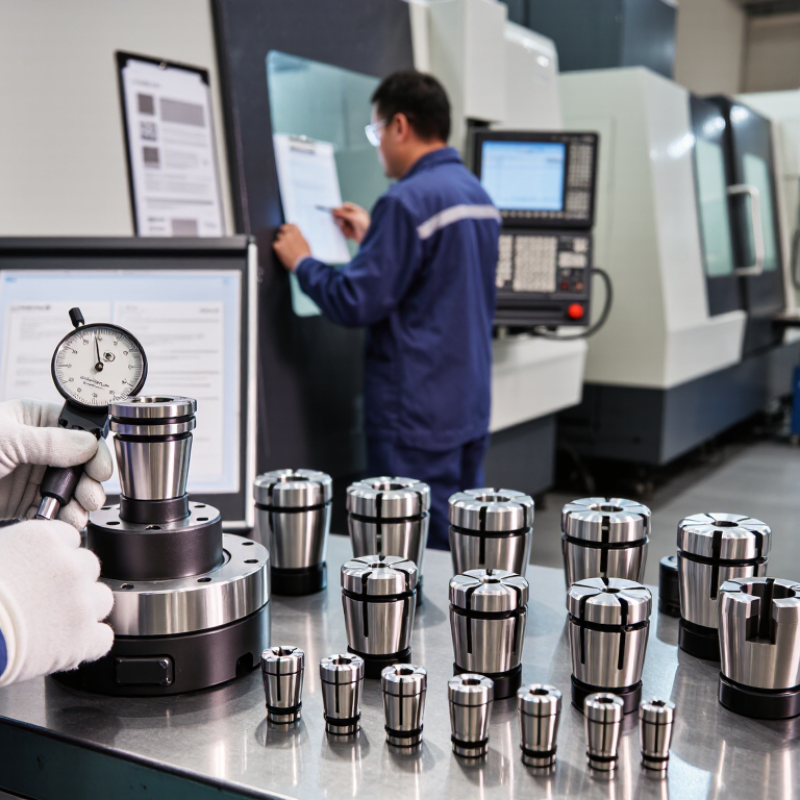
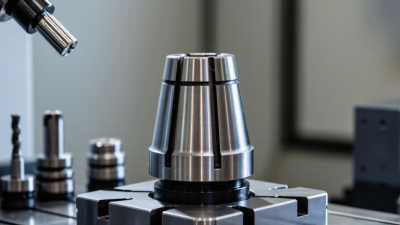
A collet is a precision gripping sleeve that holds a tool or workpiece inside a machine spindle. Its split body contracts around the shank, creating balanced radial pressure during rotation. This small component affects runout, surface finish, tool life, and operator confidence. Small part. Big effect.
A capable China collet manufacturer should control steel selection, heat treatment, grinding, and final inspection. Ask how runout is measured, which gauges are used, and whether inspection records are traceable. Practical experience matters because a polished catalog cannot reveal poor clamping under heat or repeated cycles. Look for evidence. Consistent batch quality, clear tolerance data, and application testing are valuable signs of reliable production.
Material hardness must support strength without making the fingers brittle. The taper and bore also need close coordination with the machine system. I would request sample measurements, testing details, and a clear replacement policy before placing a large order. That step may feel slow. It can prevent costly vibration later. Even experienced buyers sometimes focus on price first, then discover unstable gripping during production. A trial run may reveal what a specification sheet misses.
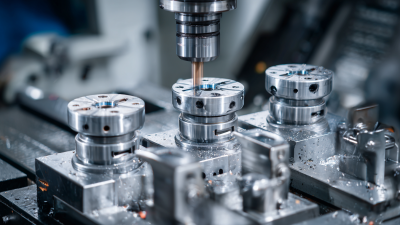
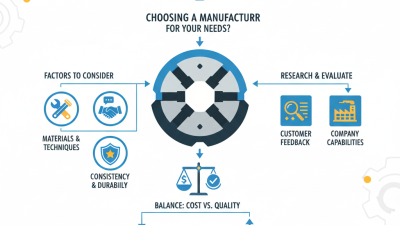
How to Choose a Top China Collet Manufacturer?
A qualified China collet manufacturer should meet recognized dimensional and performance standards. For ER collets, ask for conformity with DIN 6499 or ISO 15488. These standards control taper geometry, gripping range, and interchangeability. Request inspection records for runout, not only a general quality certificate. For precision work, many buyers specify runout below 5 μm at the collet nose. The measurement position must be stated clearly. Otherwise, the number may sound better than it is.
Material control deserves equal attention. The manufacturer should provide EN 10204 3.1 material certificates and documented heat-treatment results. Hardness variation can affect gripping force and service life. Dynamic balancing should follow ISO 21940-11 when collets operate at high spindle speeds. Surface finish and slit geometry also require consistent inspection. ISO 230-2 can support machine-tool positioning verification, although it does not replace collet testing. This distinction is often missed.
A reliable supplier should operate an ISO 9001 quality system with traceable batch records. The ISO Survey 2023 reports more than one million ISO 9001 certificates worldwide, so certification alone proves little. Ask for calibration certificates, capability studies, and sample inspection data. A process capability target of Cpk 1.33 is a useful purchasing benchmark. Still, it is not universal. A polished report can hide weak sampling. Independent testing of trial lots remains sensible, especially when five-micron accuracy affects scrap, vibration, and tool life.
A qualified collet manufacturer should provide documented inspection results for dimensional accuracy, radial runout, hardness consistency, and repeatability. The chart shows commonly specified maximum runout levels for ER collet accuracy classes; lower values indicate better tool-holding precision.
Choosing a top China collet manufacturer requires more than comparing prices. Start with traceable material records. Ask for the steel grade, heat-treatment batch, hardness results, and supplier mill certificate. ASTM E18 provides the recognized method for Rockwell hardness testing. However, hardness alone does not prove long service life. Grain structure, elasticity, and grinding quality also matter.
Request inspection data for runout, taper accuracy, slot symmetry, and surface roughness. ISO 230-2 explains how positioning accuracy and repeatability should be tested under controlled conditions. ISO 286-2 helps interpret tolerance grades. For an ER-style collet, ask whether the quoted runout applies at the gripping nose, under a defined gauge length, and after repeated clamping. A small number without test conditions means little. Really little.
A reliable factory should provide CMM records, calibrated instrument details, and sample inspection reports before mass production. Check whether gauges are traceable to national or international standards. A practical trial should test several diameters, not only one polished sample. Measure the same collet before and after repeated tightening. My earlier checklist focused too heavily on initial accuracy; that was a weakness. Elastic recovery and repeatability often reveal more. Visit the grinding area if possible. Look for temperature control, clean fixtures, and operators who understand datum control. A certificate can be genuine yet incomplete.
Choosing a top China collet manufacturer requires more than counting machines. Manufacturing capacity should be measured through monthly output, machine utilization, inspection resources, and delivery records. Deloitte’s 2024 Smart Manufacturing and Operations Survey found that 86% of manufacturers expect smart manufacturing to strengthen competitiveness within five years. Ask whether the factory uses digital production tracking, not just whether it owns modern equipment. Request sample process sheets, tolerance records, and recent on-time delivery data. Numbers need proof. A large workshop can still hide weak scheduling.
Customization shows engineering maturity. Review how the supplier handles drawings, materials, heat treatment, surface finishing, and tight runout requirements. ISO’s latest Survey reports more than one million ISO 9001 certificates worldwide, but certification alone cannot prove excellent collet performance. Check calibration records, first-article inspection, material traceability, and corrective-action reports. Request a prototype before approving volume production. This adds time, yet it can expose design errors early. I have seen specifications become vague during email exchanges; that is a buyer’s problem too.
Support should remain measurable after the purchase. Confirm response times, technical documentation, replacement procedures, and change-control practices. A reliable manufacturer should explain how it investigates oversized bores, uneven grip, or premature wear. Ask for an 8D report example, without confidential customer information. Also compare packaging, export documents, and spare-part availability. Perfect communication is unlikely. Clear ownership matters more. A practical supplier will question an unrealistic tolerance instead of accepting it silently.
Choosing a top China collet manufacturer requires evidence, not attractive product photos. During supplier checks, request drawings, steel heat numbers, hardness results, and measured runout data. I prefer reports from an actual production lot, not one perfect sample. Runout matters. For precision collets, test repeatability with the intended toolholder and gauge. Record results at room temperature, because workshop conditions can distort comparisons.
Certification needs careful verification. The ISO Survey 2022 recorded 1,265,216 ISO 9001 certificates worldwide. That number shows adoption, not automatic product quality. Check the certificate number, issuing body, validity, and manufacturing scope through an accredited database. Ask for calibration records and corrective-action reports. A supplier that refuses these details deserves caution. I once accepted a certificate PDF too quickly. That was a mistake.
Price comparisons should separate steel grade, heat treatment, grinding tolerance, inspection, packaging, tooling, and freight. Compare identical specifications across three quotations. The World Bank’s 2023 Logistics Performance Index evaluates tracking, international shipments, logistics competence, and timeliness. Ask the manufacturer for its own monthly on-time delivery data. Require evidence from the last six to twelve months, including delayed orders and corrective actions. Perfect records may be unrealistic. Honest explanations are often more useful.
| Evaluation Dimension | What to Verify | Practical Benchmark | Recommended Evidence | Warning Signs | Suggested Weight |
|---|---|---|---|---|---|
| Manufacturing Experience | Years producing collets, chuck components, or precision tooling; experience with the required collet type and application. | At least 5 years of relevant production experience, with documented capability for the required size range and tolerance level. | Factory profile, production records, sample inspection reports, process flow, and references for comparable applications. | Only general trading experience, no production records, or inability to explain the manufacturing process. | 10% |
| Reputation and Customer References | Consistency of delivery, product quality, communication, and after-sales support among previous buyers. | Obtain at least 2–3 recent references or independently verifiable transaction records for similar products. | Redacted purchase orders, inspection feedback, export documentation, customer references, and verified business history. | Unverifiable testimonials, copied product images, inconsistent company information, or refusal to provide references. | 15% |
| Technical Capability | Ability to control material, heat treatment, grinding, geometry, concentricity, runout, and surface finish. | Supplier should provide measurable specifications and inspection methods rather than relying only on “high precision” claims. | Technical drawings, tolerance tables, material certificates, heat-treatment records, calibration records, and sample measurement reports. | No defined tolerances, no measurement data, or specifications that change between quotation and sample approval. | 20% |
| Certifications and Quality System | Whether the quality-management system and certificates are relevant, current, and issued to the actual manufacturing entity. | Current ISO 9001 certification is a useful baseline; certificates should be verified through the issuing body or official registry where available. | Certificate number, validity period, certified scope, legal entity name, audit status, and calibration certificates for critical equipment. | Expired certificates, mismatched legal entities, unverifiable certificate numbers, or certificates unrelated to manufacturing activities. | 15% |
| Material Traceability | Whether raw material batches can be traced from purchase through heat treatment, machining, inspection, and shipment. | Each production batch should have a traceable lot number and corresponding material or heat-treatment documentation. | Material mill certificate, batch card, heat-treatment report, internal lot number, and final inspection record. | Mixed materials, missing batch numbers, incomplete records, or inability to link inspection results to the delivered goods. | 10% |
| Pricing Transparency | Whether the quotation clearly defines material, specification, quantity, packaging, tooling, inspection, shipping terms, and validity. | Compare at least three like-for-like quotations using the same drawings, quantity, tolerance, Incoterm, packaging, and inspection requirements. | Formal quotation, cost breakdown, payment terms, tooling ownership terms, sample charges, and written change-control procedure. | An unusually low price that excludes inspection, tooling, packaging, or quality requirements later added as extra charges. | 10% |
| Sample and Inspection Performance | Whether samples meet dimensional, functional, material, and surface-finish requirements before mass production. | Approve a documented first article or pre-production sample before authorizing the full production batch. | Approved drawing, first-article report, independent inspection report, functional test results, and retained reference sample. | Pressure to skip sampling, reluctance to accept independent inspection, or samples that differ from the quoted specification. | 15% |
| Production Capacity | Available machinery, grinding capacity, inspection equipment, staffing, and ability to handle repeat orders. | Capacity should support the buyer’s forecast without compromising tolerance control or lead time during peak periods. | Equipment list, production schedule, bottleneck analysis, capacity statement, and documented subcontracting controls. | Capacity claims unsupported by equipment records, excessive dependence on uncontrolled subcontractors, or long unexplained lead times. | 5% |
| Lead Time and Delivery Reliability | Historical on-time delivery, realistic production schedules, export experience, and contingency planning. | Require a written schedule for sampling, production, inspection, and shipment; track actual performance over initial orders. | Production plan, shipment records, agreed delivery milestones, packaging photos, and corrective-action records for delays. | Repeated schedule changes, vague delivery commitments, or failure to communicate risks before the due date. | 10% |
| Communication and Technical Support | Speed and accuracy of responses, drawing review, engineering support, and ability to manage technical changes. | Technical questions should receive clear written answers, with revision-controlled drawings and documented approvals. | Response records, drawing revisions, meeting notes, engineering change notices, and named quality contacts. | Sales-only communication, unclear answers to technical questions, or undocumented specification changes. | 5% |
| Payment and Commercial Security | Legal entity verification, banking consistency, payment protection, warranty terms, and dispute-resolution provisions. | Bank-account ownership should match the contracted legal entity; payment milestones should reflect sample and inspection approval. | Business registration details, signed contract, pro forma invoice, warranty terms, inspection clause, and agreed dispute process. | Requests for payment to unrelated accounts, last-minute bank changes, pressure for full prepayment, or missing warranty terms. | 5% |
Benchmark figures are general purchasing guidelines for comparing suppliers. Final acceptance should be based on the approved drawing, application requirements, agreed inspection plan, and verified production evidence.