How to Buy Compressed Air for Your Needs?
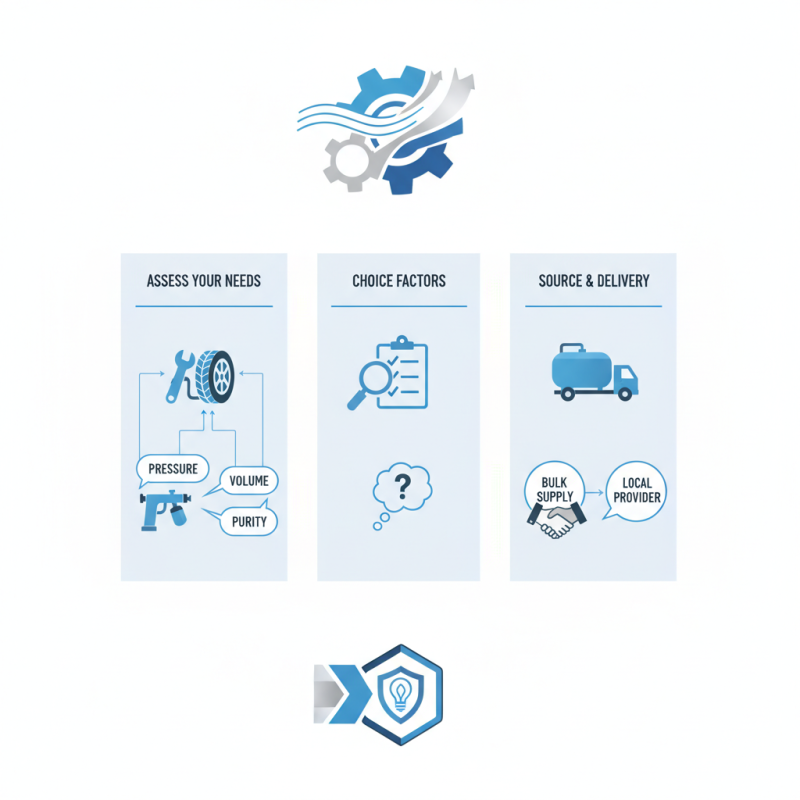
When you decide to buy compressed air, it's essential to consider your specific needs. Compressed air is widely used in many applications, from powering tools to inflating tires. Understanding how to choose the right type is crucial for efficiency.
Various factors influence your decision. You must consider the pressure levels, volume, and purity required for your tasks. Sometimes, potential buyers overlook these details, which can lead to inefficiencies. Making an informed choice is vital to avoid costly mistakes later on.
Additionally, assessing the source and delivery method of compressed air is important. Whether you purchase it in bulk or via a local supplier, quality matters. You may find options that seem appealing at first but lack the reliability you need. Take the time to research and reflect on what best suits your requirements.
Understanding Your Compressed Air Requirements
Understanding your compressed air requirements is crucial for making the right purchase. First, consider the applications you need compressed air for. Different tasks, like powering tools, inflating tires, or running pneumatic machines, require different pressures and volumes. Measuring the air consumption of your equipment can provide a clearer picture. This varies widely, so take note of the specific needs.
Next, think about the environment in which you will use the air. Will it be in a workshop or an outdoor setting? Dust and moisture can affect the performance of your compressor and tools. Sometimes, a standard compressor might not suffice. In such cases, you may need additional filtration or drying equipment. Make a list of the tools you'll power and their specifications. This preparation can save you from potential headaches later.
Lastly, consider the future. Are you planning to expand your operations? If so, buying a larger or more versatile compressor now might be wise. However, don't overlook the balance between your current needs and future plans. Oversizing can lead to inefficiencies and unnecessary costs. Evaluate and refocus your requirements regularly to ensure they meet your needs effectively.
Evaluating Different Types of Compressed Air Systems
When evaluating different types of compressed air systems, understanding your specific needs is crucial. There are various systems available, each with unique advantages. Consider a rotary screw compressor if you need continuous air supply. This type is efficient and suitable for larger operations. However, they can be expensive and require regular maintenance.
For smaller applications, a piston compressor might be sufficient. These systems are typically less costly but may not keep up with high demands. They are easy to maintain but can be noisy. Assessing the volume and pressure requirements of your tasks will guide you in choosing the right system.
Tips: Always account for energy consumption. An energy-efficient system can reduce long-term costs. Remember that installation settings may influence performance. A poorly ventilated space can cause overheating. Don't rush the decision; take the time to weigh your options. What works for one project may not suit another.
Identifying Key Features and Specifications
When selecting compressed air, key features and specifications matter. Look for the horsepower rating. This indicates the compressor's power and efficiency. A higher rating typically offers more air output. However, more power means more cost. Balance your need for air against your budget constraints.
Consider the tank size as well. A larger tank holds more air, providing a steady supply. Yet, larger tanks can be bulky and heavy. Think about your workspace's layout. Is there enough room? Also, check the noise level. Some compressors can be quite loud, which might be disruptive. A quieter model may be more suitable for indoor use.
Be aware of the intended applications. Are you using compressed air for inflating tires or powering tools? Different uses require different specifications. Sometimes, a lower PSI setting is adequate. In contrast, certain tools may need high pressure to function correctly. Make a list of your requirements to help narrow your choices. This process may reveal your priorities and lead you to reassess your original needs.
Comparing Compressed Air Suppliers and Brands
When comparing compressed air suppliers, consider their overall reliability. Investigate each supplier's reputation. Customer reviews can reveal strengths and weaknesses. Look for consistent feedback about service quality. A supplier’s history can offer insight into their longevity in the market.
Evaluate the range of products they offer. Different suppliers may specialize in various air pressures and purity levels. Check the specifications thoroughly. Knowing your needs will help determine which supplier aligns with them. Pay attention to delivery options and lead times. Some companies are faster than others.
Pricing is crucial but shouldn’t be the only factor. A lower price might indicate lower quality. Take time to analyze costs versus benefits. Think about the warranty and support offered. Reflect on how much waste might come from choosing the wrong supplier. Too often, businesses regret hasty decisions when purchasing compressed air.
Budgeting and Planning for Compressed Air Purchase
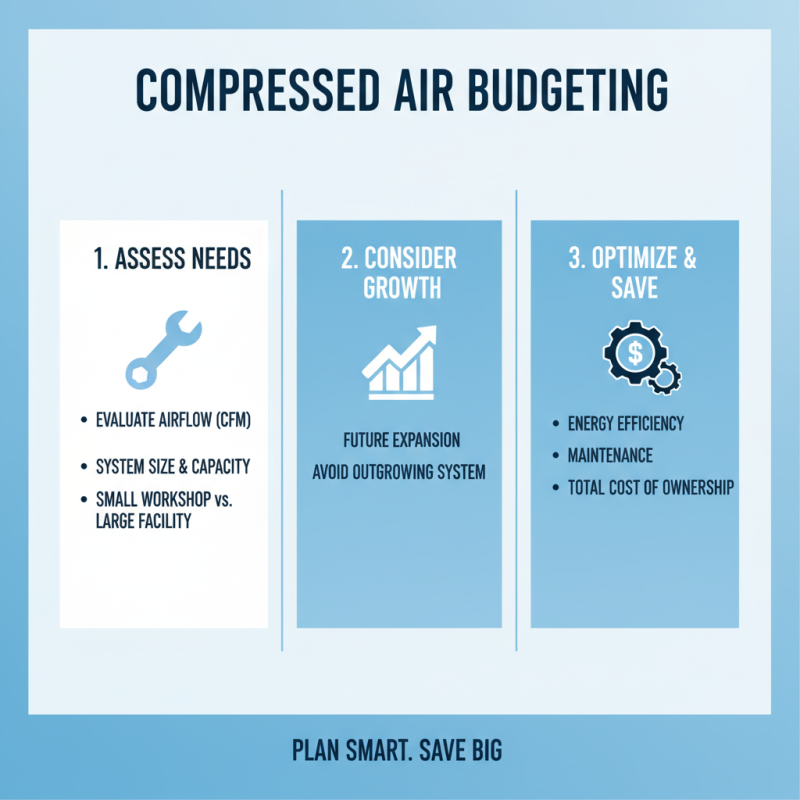
When budgeting for compressed air, it’s essential to assess your specific needs. Start by evaluating how much air you will require. This will help you determine the system size and capacity. A small workshop may need less air than a large industrial facility. Consider future growth as well. You don’t want to outgrow your system too quickly.
Next, think about the additional costs. Installation, maintenance, and energy consumption can add up. Installing a new air compressor often incurs hidden costs. What about energy efficiency? Systems that consume less power can save you money over time. However, these may have a higher upfront cost.
Don’t forget about potential regrets. Selecting a system that lacks flexibility can pose challenges down the line. Sometimes, it’s tempting to go for the cheapest option. This could lead to increased downtime. Be realistic about your budget. It’s better to invest in a reliable system than to save a few dollars now and spend more later.