Inquiry
Form loading...

How to Buy Air Filtration Systems for Your Home in 2025

As we move into 2025, the importance of maintaining clean air in our homes has never been more critical. With increasing concerns about air quality due to environmental changes and health repercussions, the need for effective air filtration systems is paramount. If you're considering making a purchase to enhance the air quality in your living space, knowing how to buy air filtration systems is essential. Understanding the types of filters available, their efficiency in removing pollutants, and the specific needs of your home can significantly influence your decision-making process.

In the quest to buy air filtration systems, factors such as room size, specific pollutants you wish to target, and your budget play a vital role. The market today offers a diverse range of products, from HEPA filters to activated carbon systems, each designed to tackle unique air quality challenges. As you navigate through the options, it's crucial to keep an eye out for features that cater to your household's requirements, ensuring you choose a system that not only fits your home but also your lifestyle. By equipping yourself with the right knowledge, you can make an informed decision that benefits both your health and your environment.

How to Buy Air Filtration Systems for Your Home in 2025

Understanding Air Filtration System Types and Technologies in 2025

When considering air filtration systems for your home in 2025, it's essential to understand the various types and technologies available. One prominent option is HEPA (High-Efficiency Particulate Air) filters, which can capture 99.97% of particles down to 0.3 microns. These filters are particularly effective against allergens such as dust, pollen, and pet dander, making them ideal for homes with allergy sufferers. Another technology gaining traction is UV-C light filtration, which utilizes ultraviolet light to eliminate bacteria, viruses, and mold spores, ensuring that the air not only feels clean but is also pathogen-free.

Tips: When selecting an air filtration system, consider your specific needs. If you have pets or allergies, prioritize systems with HEPA filters. For areas prone to mold or viruses, look into units featuring UV-C technology. Also, pay attention to the Clean Air Delivery Rate (CADR) to ensure the system can effectively filter the volume of air in your space.

Carbon filters are yet another valuable technology, particularly for mitigating odors and volatile organic compounds (VOCs). These filters use activated carbon to trap harmful gases, making them a great addition alongside other filtration methods. When shopping, always check for multi-stage filtration systems that combine various technologies for optimal air quality. This approach not only enhances filtration efficiency but also addresses a broader range of pollutants, ensuring a healthier living environment.
Assessing Air Quality Standards and Regulations for Home Environments

When considering air filtration systems for home environments in 2025, it’s crucial to understand the air quality standards and regulations that guide consumer choices. The rising concerns over indoor air quality have led to more stringent guidelines, influenced by agencies focused on public health and environmental protection. These regulations often define acceptable levels of pollutants, such as particulate matter, volatile organic compounds (VOCs), and allergens, ensuring that products meet safety and efficiency criteria.

As you navigate the purchasing process, familiarize yourself with the certifications and ratings that air filtration systems can obtain. Look for indicators of efficiency, such as the MERV (Minimum Efficiency Reporting Value) rating, which assesses how well filters capture particles of varying sizes. Understanding these standards can help you make informed decisions about which systems best address the specific air quality issues in your home, from dust and pollen to smoke and chemical vapors. By prioritizing compliance with these regulations, you not only enhance your living environment but also contribute to broader public health goals.

Evaluating Efficiency Ratings: MERV, HEPA, and Beyond for Optimal Performance

When selecting air filtration systems for your home, understanding efficiency ratings such as MERV (Minimum Efficiency Reporting Value) and HEPA (High-Efficiency Particulate Air) is crucial for ensuring optimal performance. The MERV rating system ranges from 1 to 20, indicating the filter's ability to capture particles of varying sizes. A higher MERV rating means better filtration efficiency; for instance, filters with ratings from 13 to 16 can remove smaller particles like pollen and pet dander effectively. However, it's essential to choose a filter with a MERV rating that matches your HVAC system's specifications, as overly efficient filters may restrict airflow and strain the system.

HEPA filters are recognized for their exceptional ability to capture at least 99.97% of airborne particles that are 0.3 microns in size. This includes allergens, dust, mold spores, and even certain bacteria. For those with respiratory issues or allergies, investing in HEPA filtration can significantly improve indoor air quality. Additionally, consider other options like activated carbon filters for odors and chemical pollutants, or UV light filters that can neutralize harmful microorganisms. Always assess your specific air quality needs and the system compatibility when choosing filtration solutions to achieve the best results for your home's environment.

Air Filtration Systems Efficiency Ratings in 2025

The following chart illustrates the efficiency ratings of different air filtration systems based on MERV (Minimum Efficiency Reporting Value) and HEPA (High-Efficiency Particulate Air) ratings. As homeowners look to improve indoor air quality in 2025, understanding these efficiency ratings is crucial for selecting the optimal air filtration system.

Budgeting for Air Filtration Systems: Costs, Installation, and Maintenance

How to Buy Air Filtration Systems for Your Home in 2025

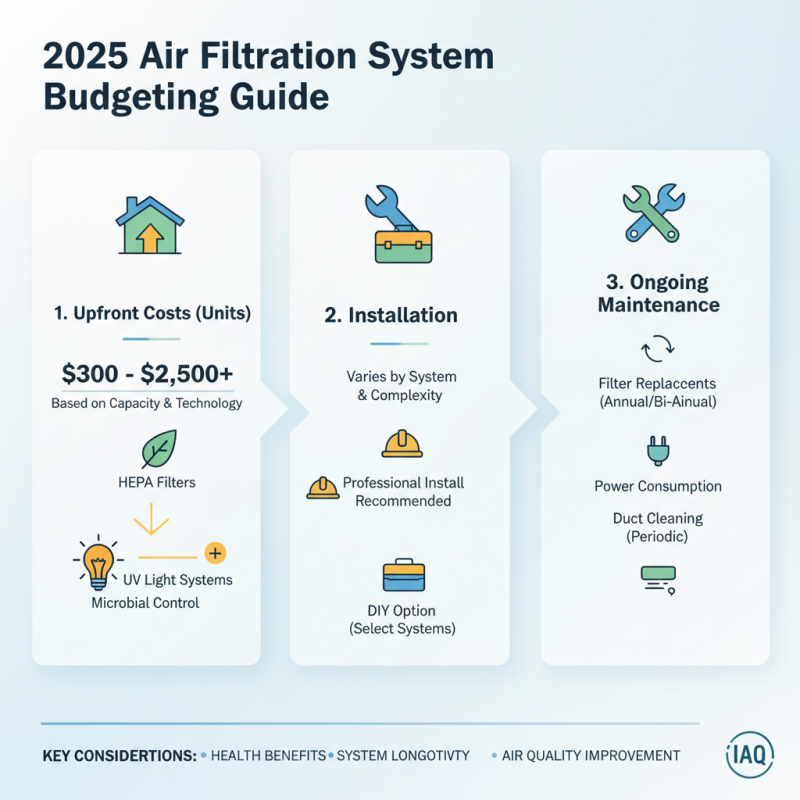
When budgeting for air filtration systems in 2025, it's essential to consider not only the upfront costs of the units but also the expenses associated with installation and ongoing maintenance. According to industry reports, the average cost of a dedicated home air filtration system ranges from $300 to $2,500, depending on the capacity and technology employed. For instance, HEPA filters are known for their efficiency in trapping fine particulates, while advanced systems that incorporate UV light for microbial control can be more costly but offer significant health benefits.

Installation costs should also be factored into your budget. Professional setup can typically add between $100 and $500 to your overall expenditure, depending on the complexity of the system and your home’s existing ductwork or electrical setup. Moreover, regular maintenance is crucial for maintaining effectiveness. Estimates suggest that homeowners should set aside about $100 annually for filter replacements and system checks to ensure optimal performance. Given the increasing awareness of indoor air quality, investing in an efficient air filtration system can yield long-term health benefits and potentially enhance property value, making it a worthy consideration in household budgeting.

Future Trends in Air Filtration: Innovations Shaping Home Air Quality Solutions

As we move into 2025, innovations in air filtration systems are set to revolutionize how we maintain clean and healthy indoor environments. One of the most compelling trends is the integration of smart technology into air filtration units. These advanced systems utilize real-time monitoring and data analytics to detect changes in air quality, providing users with tailored filtration solutions. Sensors can track pollutants and allergens, adjusting the filtration levels automatically to ensure optimal air conditions in homes. This technology not only enhances air quality but also offers the convenience of remote control via mobile applications.

Another significant trend on the horizon is the development of eco-friendly filtration materials. In response to increasing environmental concerns, manufacturers are focusing on sustainable practices and biodegradable components in their filtration systems. New advancements in materials science have led to the creation of filters that are not only highly efficient but also less harmful to the environment. These innovations pave the way for safer disposability and reduced ecological footprints, making it easier for homeowners to prioritize both health and environmental responsibility in their choices.